Momo Rare Books
Medieval Illuminated Manuscript BOOK OF HOURS, c1430 Vellum Latin W/Slipcase
Medieval Illuminated Manuscript BOOK OF HOURS, c1430 Vellum Latin W/Slipcase
Couldn't load pickup availability
Overview
A genuine 15th-century illuminated Book of Hours, produced during the height of late medieval devotional culture. This finely executed manuscript dates to approximately 1430–1440, placing it firmly within the mature Gothic period of European manuscript production.
Compact and intended for personal use, this volume represents the most popular form of private religious book in the later Middle Ages, used daily by laypeople for prayer and meditation.
- Date: c. 1430–1440
- Origin: Likely Northern France
- Language: Latin
- Material: Manuscript on vellum (animal parchment)
- Script: Gothic textura
- Format: Small portable (pocket-sized devotional book)
Binding
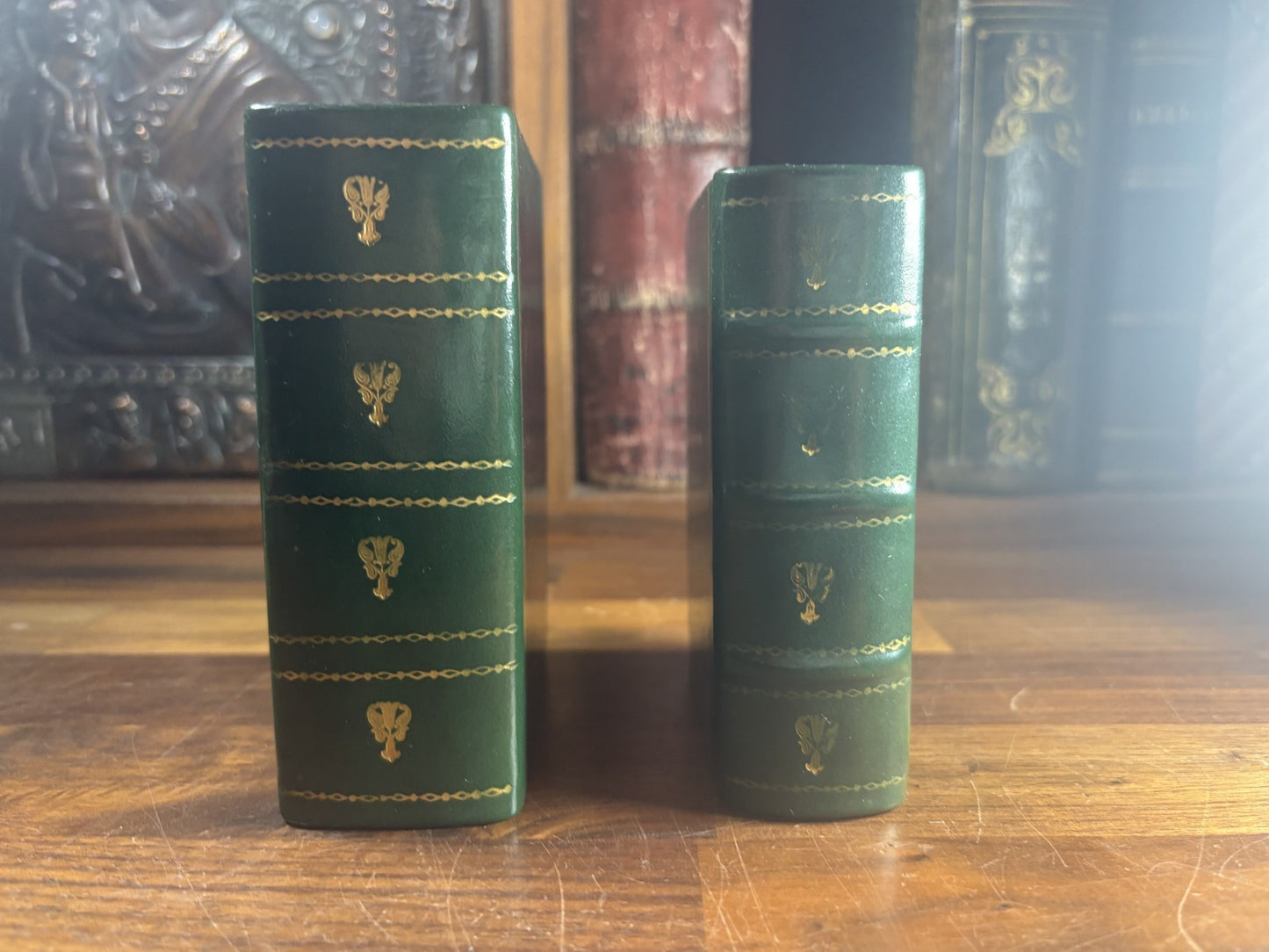
- Later green leather binding with gold tooling (20th century)
- Decorative spine with gilt ornamentation
- Protective custom case/cover
Illumination & Decoration
- Handwritten text in dark brown/black ink
- Rubrication in red throughout
- Decorative initials in blue, red, and burnished gold
- Fine penwork flourishes extending from initials
- Occasional line fillers and ornamental detailing
The decoration is characteristic of a skilled but non-royal workshop, suggesting a high-quality commission for a wealthy private owner rather than an aristocratic or courtly manuscript.
Contents
While not fully catalogued, the manuscript follows the standard Book of Hours format:
- Hours of the Blessed Virgin Mary
- Psalms and prayers
- Liturgical passages in Latin
- Decorated initials marking textual divisions
Manuscript Manufacturing
This manuscript was produced during the final great century of handwritten book production before the printing press transformed Europe.
Books like this were created through a highly specialized, multi-stage process:
-
Parchment preparation
Animal skins (typically calf, sheep, or goat) were cleaned, stretched, and scraped to produce vellum—durable, smooth writing material. -
Scribing
Professional scribes wrote the text by hand using quills and iron gall ink, carefully following ruling lines. -
Illumination
Artists added decorated initials and applied pigments made from minerals, plants, and metals.
Gold was applied as leaf or powder and burnished to shine. -
Assembly & binding
Gatherings (quires) were sewn together and later bound—though the current binding is a modern replacement.
By the 1430s–1440s, workshops in Paris and the Low Countries were producing Books of Hours in relatively large numbers, making them the first “mass-market” luxury books in European history.
Historical Context
This manuscript was created during a transformative period in European history:
- The Hundred Years’ War (1337–1453) was still ongoing between England and France
- The Duchy of Burgundy and Flemish cities (Bruges, Ghent) were major artistic and economic centers
- The rise of a wealthy merchant class increased demand for personal devotional books
- Gothic art was at its height, soon to transition into the early Renaissance
Books of Hours became symbols of:
- Personal piety
- Literacy and education
- Social status
Owning such a manuscript in the 15th century marked its owner as part of the cultured and prosperous elite.
Provenance
-
Later ownership label:
Dr. Joseph M. Gardner, Atlanta, Georgia
Condition
- Vellum pages with expected age-related waviness and toning
- Some minor staining, cockling, and ink offsetting
- Illumination remains clear and attractive
- Edges worn but stable
- Binding in good later condition
Collectibility
Books of Hours are among the most sought-after medieval manuscripts due to their:
- Artistic appeal
- Historical importance
- Relative accessibility compared to larger illuminated manuscripts
Share