Momo Rare Books
Manuscript Antiphonary C. late 1600s/ early 1700s
Manuscript Antiphonary C. late 1600s/ early 1700s
Couldn't load pickup availability
Description
Offered here is an authentic handwritten antiphonary, a liturgical choir manuscript containing Gregorian chant for the Divine Office. This is a genuine working church book, written by hand on rag paper, dating to approximately circa 1550–1650.
The manuscript preserves chants for Advent, Lent, and major feasts, including texts such as Kyrie eleison, Christe eleison, Credo, Sanctus, Agnus Dei, and sections for Feria (weekday offices), Sequences, and major liturgical celebrations. Musical notation is in square neumes on a four-line staff, the classical notation of Gregorian chant.
The volume is bound in an attractive hand-marbled paper binding, likely added in the 18th century, reflecting continued use and preservation within an ecclesiastical setting.
Musical & Physical Features
-
Handwritten Gregorian chant in square notation
-
Four-line red staff with black neumes
-
Latin text in a formal liturgical book hand
-
Red and black ink throughout (rubrics, initials, headings)
-
Decorated red initials
-
Written on rag paper (not parchment)
-
Later hand-marbled paper binding
-
Original manuscript, not a fragment
Details
-
Date: Late 16th to early 17th century (c. 1550–1650)
-
Material: Rag paper
-
Language: Latin
-
Notation: Square Gregorian notation
-
Binding: Later marbled paper (likely 18th century)
18 leaves in total
History of Antiphonaries
An antiphonary is a liturgical book containing the sung texts (antiphons, responsories, hymns, and psalms) for the Divine Office, the daily cycle of prayer observed in monasteries, cathedral chapters, and collegiate churches. Unlike Mass books, antiphonaries were used multiple times each day and were essential to communal worship.
Although printing was well established by the 16th century, antiphonaries continued to be copied by hand well into the early modern period. Printed choir books were expensive, heavy, and not always locally available, and many religious communities preferred manuscript copies tailored to their specific liturgical customs. As a result, handwritten antiphonaries like this one represent the final centuries of Europe’s manuscript tradition.
Manuscript Culture & Monastic Life
This manuscript reflects the enduring monastic and ecclesiastical manuscript culture of early modern Europe. Such books were produced not as luxury objects, but as functional tools for communal prayer. They were typically placed on a lectern and read by multiple singers at once, which explains the clear, spacious layout and bold notation.
In monasteries and churches, manuscript production was a devotional act as much as a practical one. Scribes were often members of the religious community, trained to copy sacred texts with accuracy and reverence. These books were sung daily, repaired, rebound, and reused—making surviving examples especially meaningful witnesses to lived religious practice rather than ceremonial display.
Provenance Notes
-
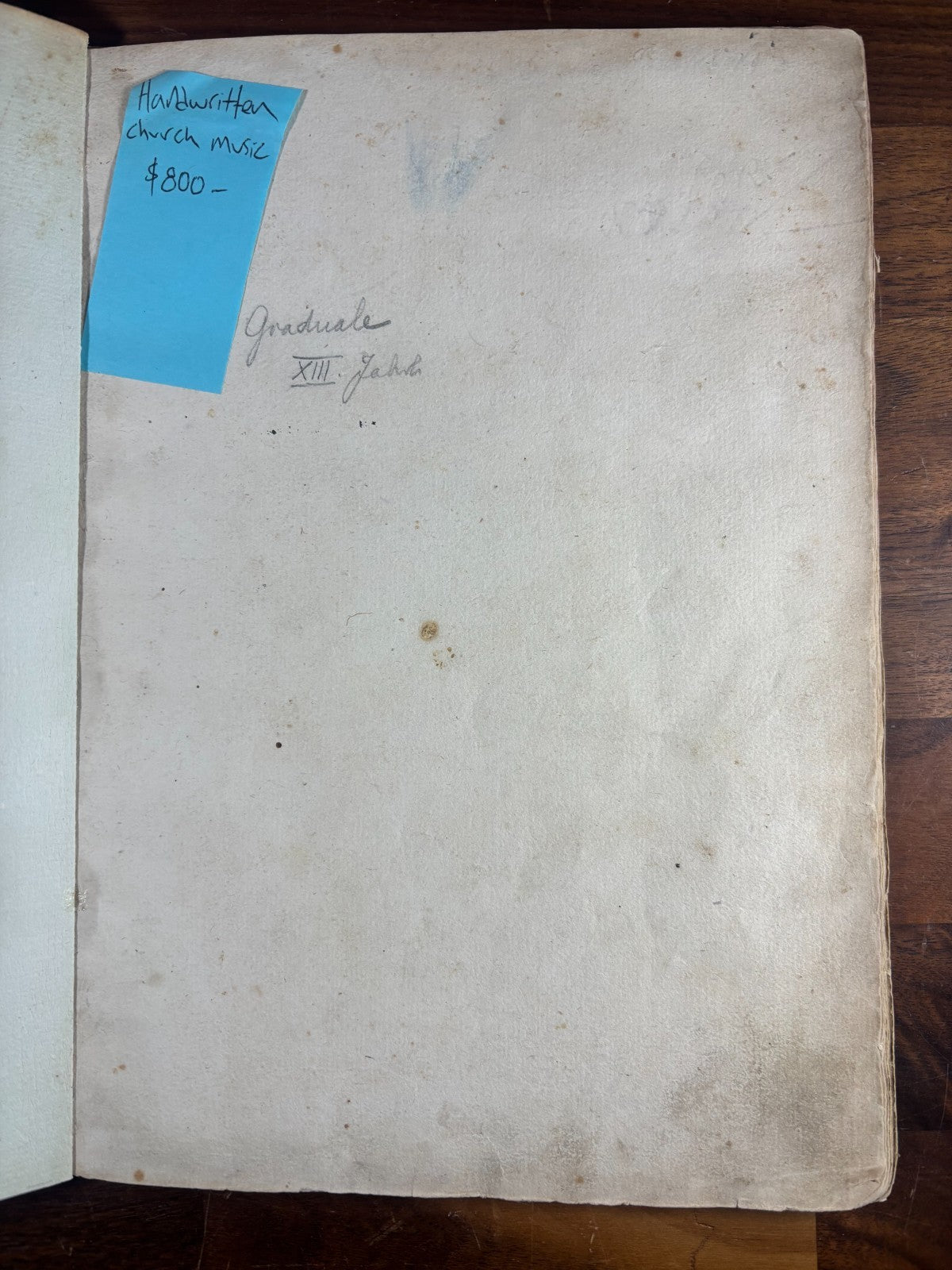
Pencil inscription inside suggests later cataloguing or ownership (likely 19th century)
-
Evidence of rebinding indicates long-term institutional use
Collectors of medieval & early modern manuscripts
Scholars of musicology, chant, or liturgical history
Institutions or libraries seeking a complete, non-fragmentary manuscript
Decorators or collectors looking for an authentic historical artifact, not a reproduction
Share