Momo Rare Books
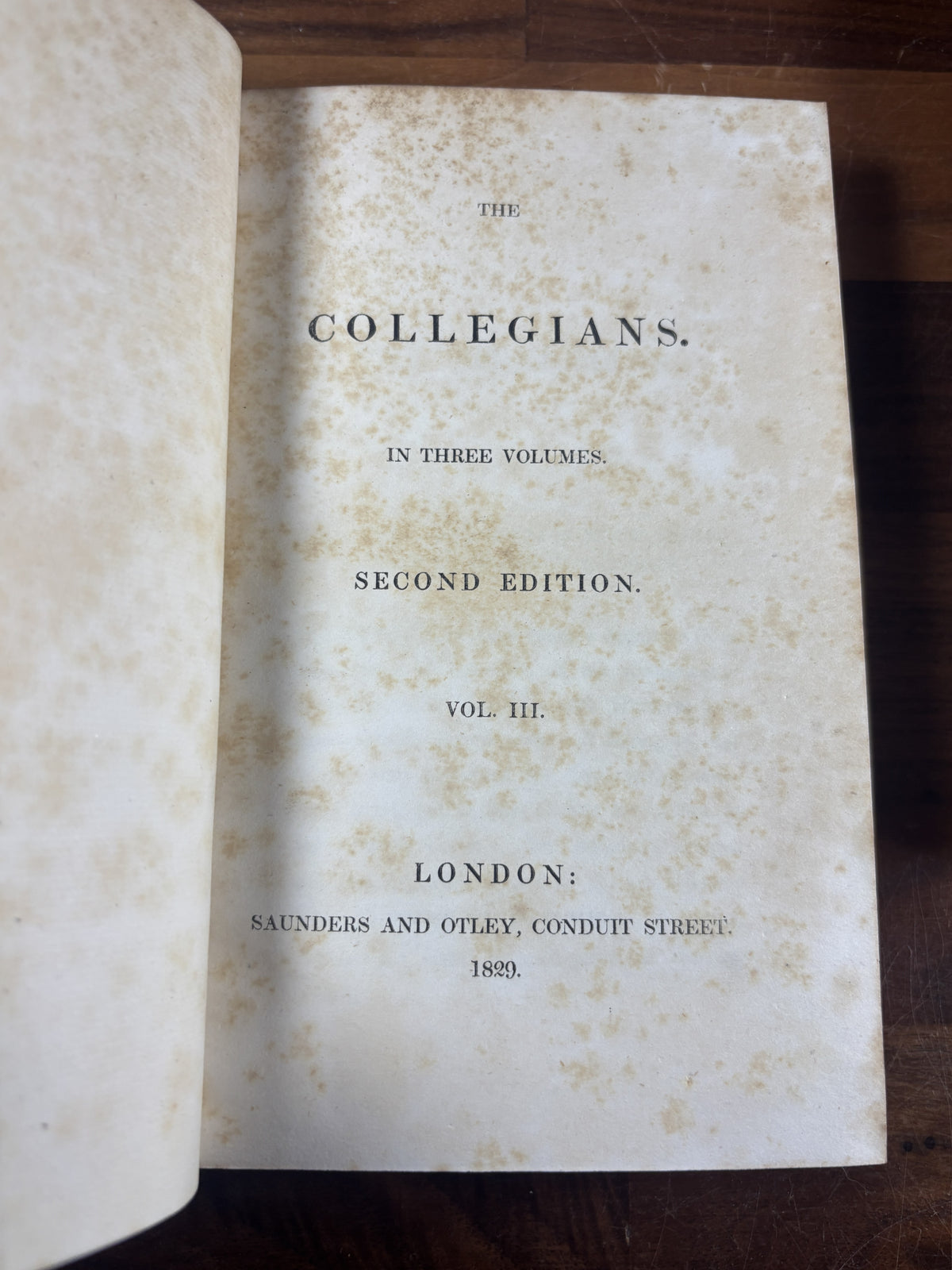
Gerald Griffin, The Collegians Second Edition, 1829, Complete 3 Volume Set
Gerald Griffin, The Collegians Second Edition, 1829, Complete 3 Volume Set
Couldn't load pickup availability
Overview:
- The Collegians
- Author: Gerald Griffin, originally published anonymously
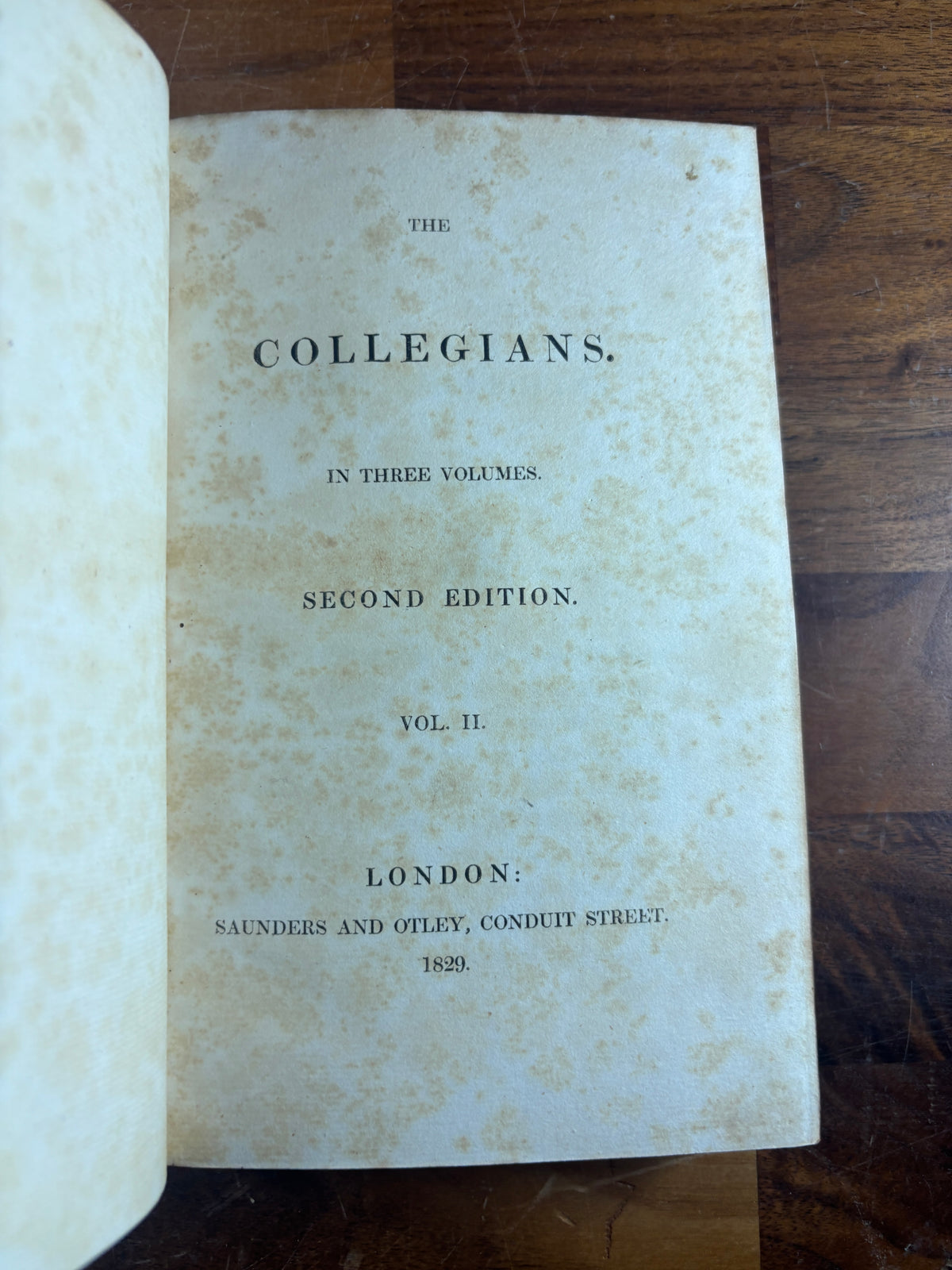
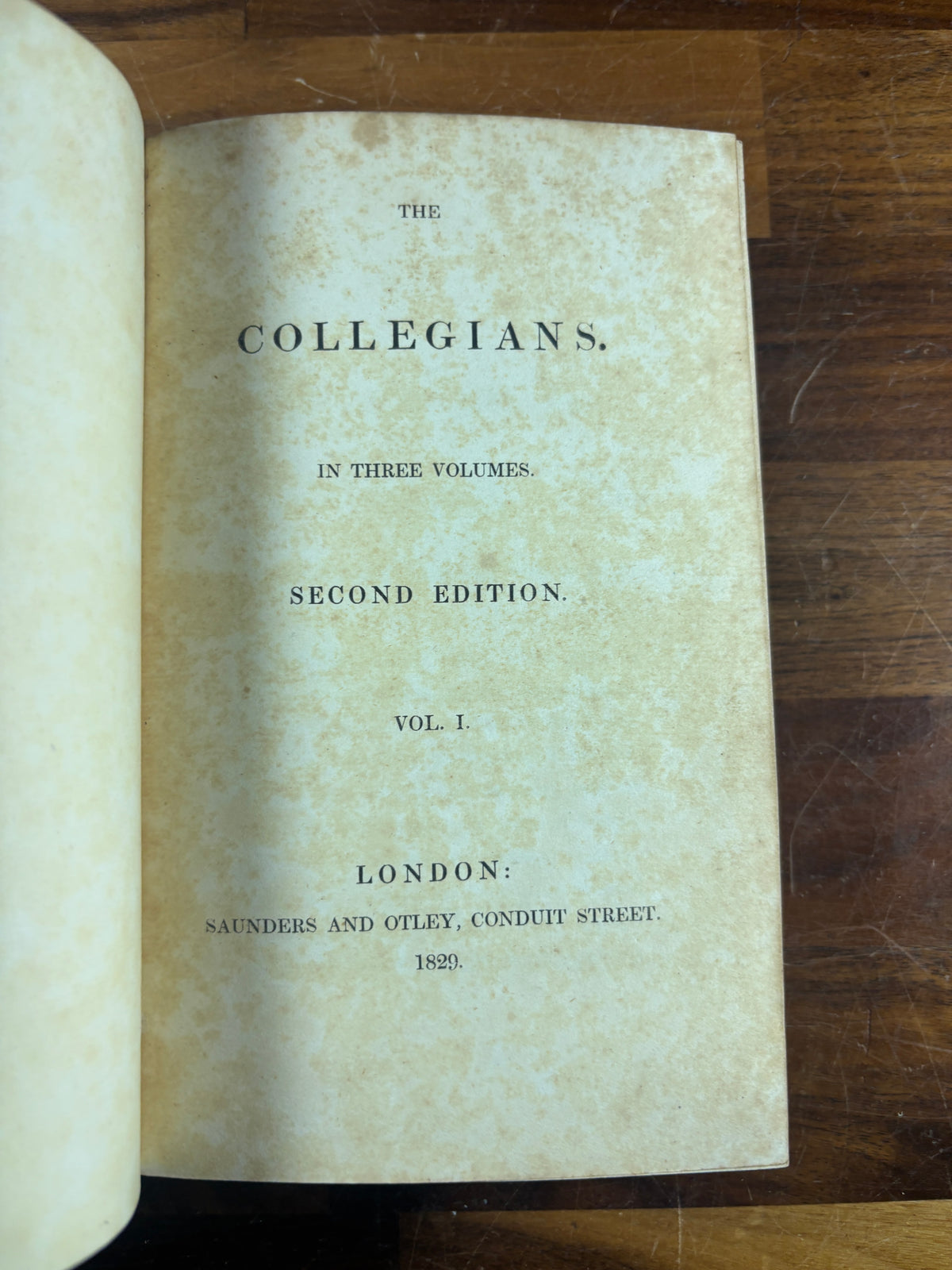
- London: Saunders and Otley, Conduit Street, 1829
- Published: London, 1829
- Publisher: Saunders and Otley, Conduit Street
- Edition: Second Edition
- Volumes: 3, complete set
- Language: English
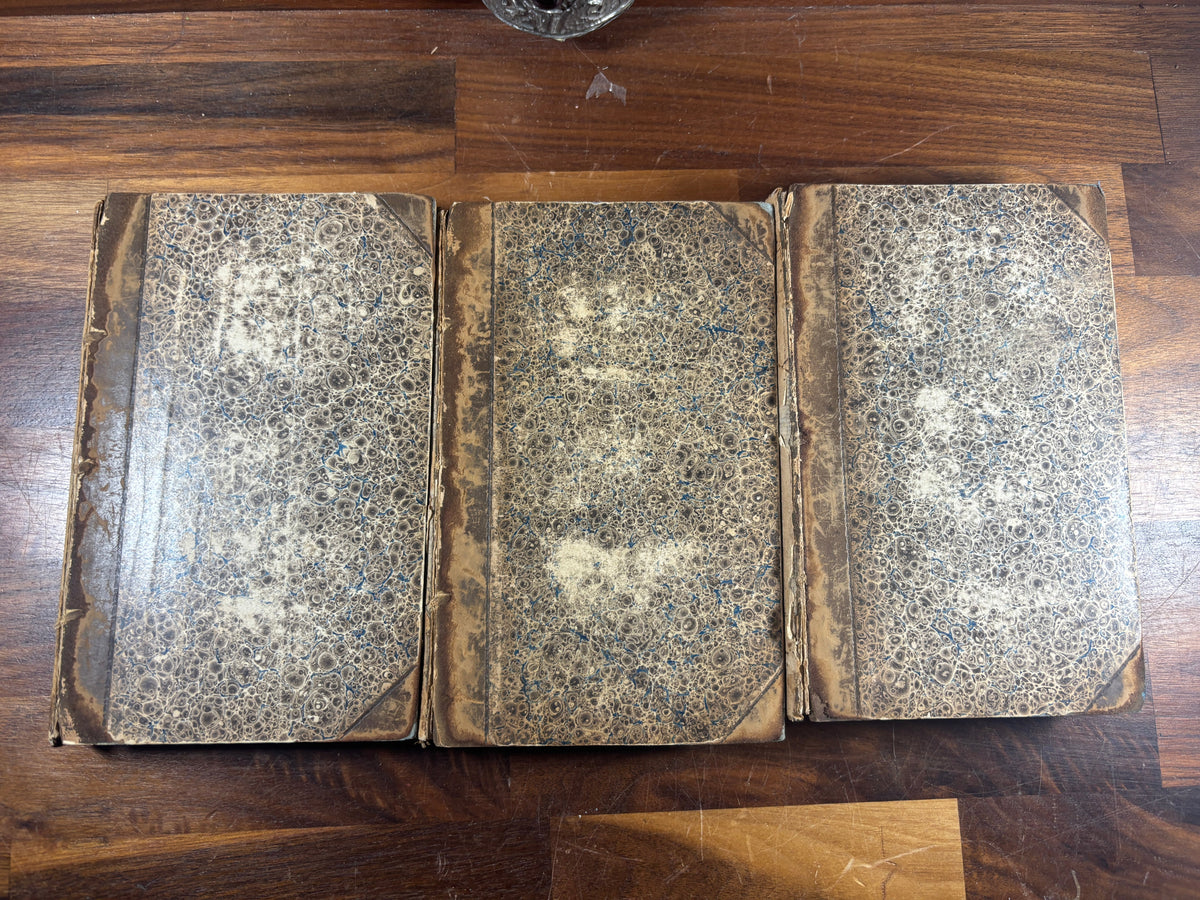
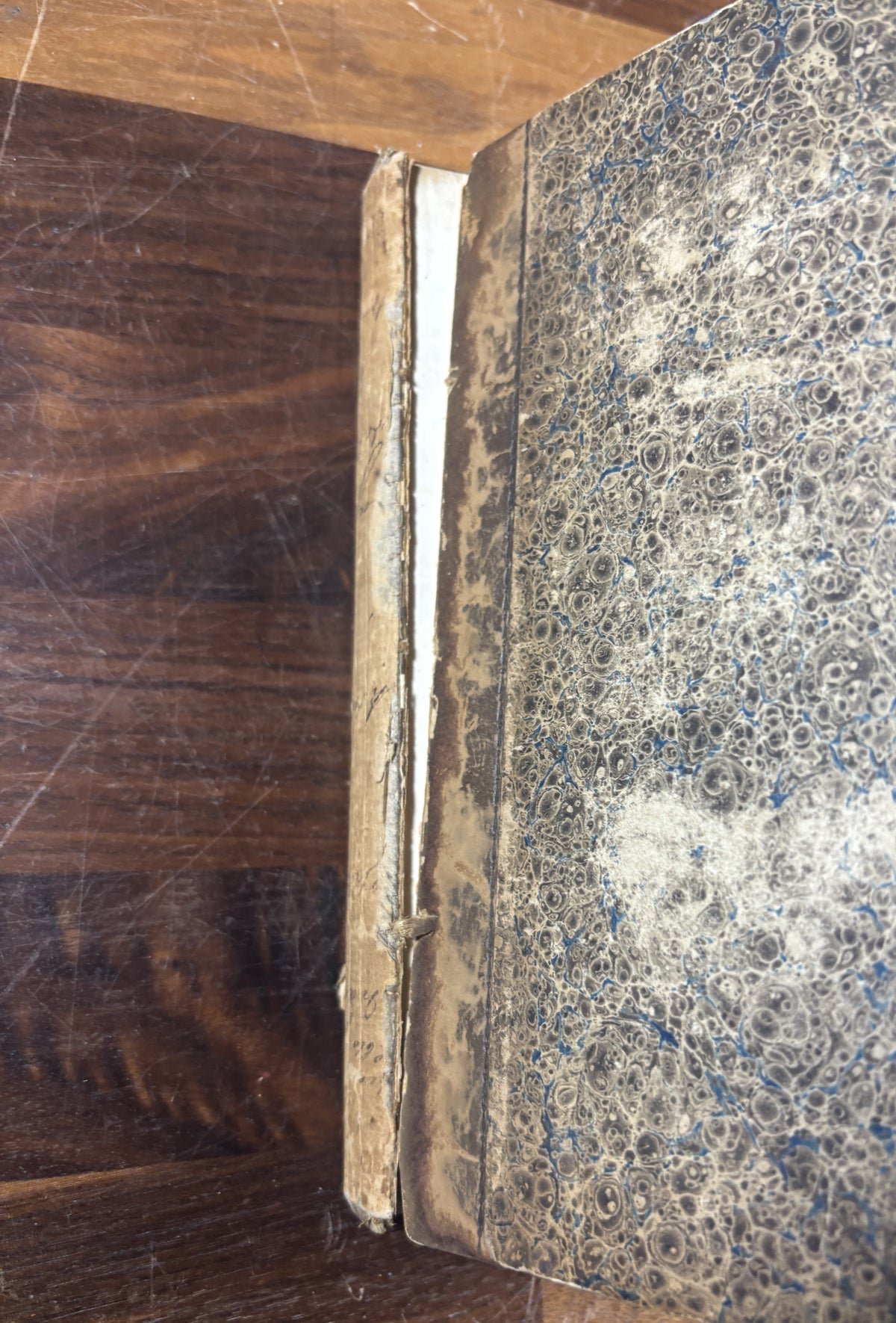
- Binding: Period half leather over marbled boards, heavily distressed
An early and complete three-volume edition of Gerald Griffin's most celebrated novel, published in the same year as the first edition. Originally issued anonymously, The Collegians became one of the most important Irish novels of the early nineteenth century and later provided the source for Dion Boucicault's enormously successful play The Colleen Bawn.
The Collegians
First published in 1829, The Collegians established Gerald Griffin as a significant figure in nineteenth-century Irish literature. The novel combines romance, crime and social commentary against the backdrop of Irish society, exploring divisions of class, religion and status.
The story was inspired by the notorious real-life murder of Ellen "Eily" Hanley, a young County Limerick woman murdered in 1819. Griffin transformed the case into fiction, setting his narrative several decades earlier during the period of the Irish Volunteers.
The novel proved sufficiently successful for this second edition to appear during the same year as the first, making this a particularly early example of the work.
Its influence continued throughout the nineteenth century. Dion Boucicault subsequently adapted Griffin's story into The Colleen Bawn, one of the most successful Irish melodramas of the Victorian stage.
An Unusual Binding Feature
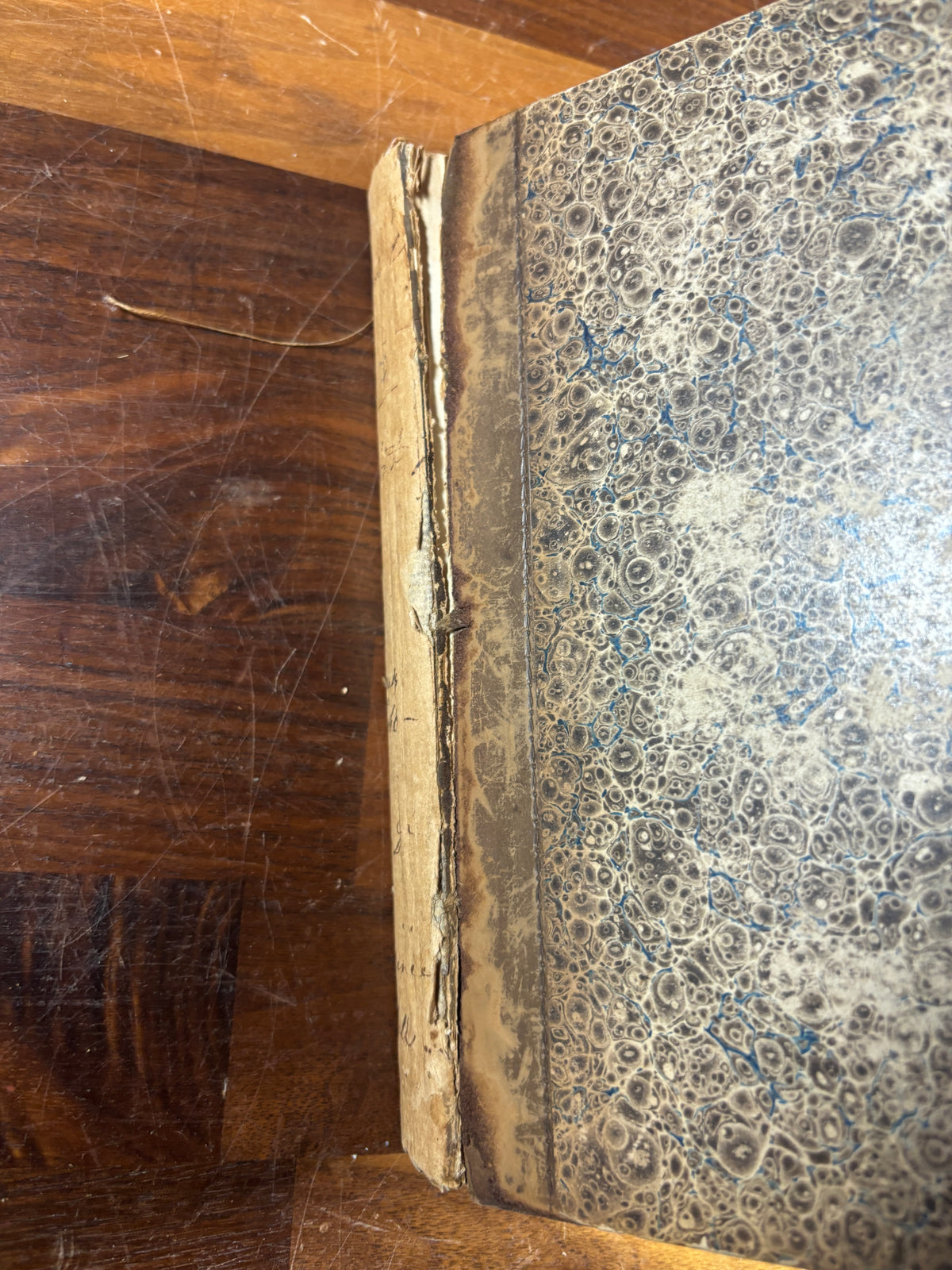
The three volumes retain their period half-leather bindings with marbled paper-covered boards, although they are now in substantially distressed condition.
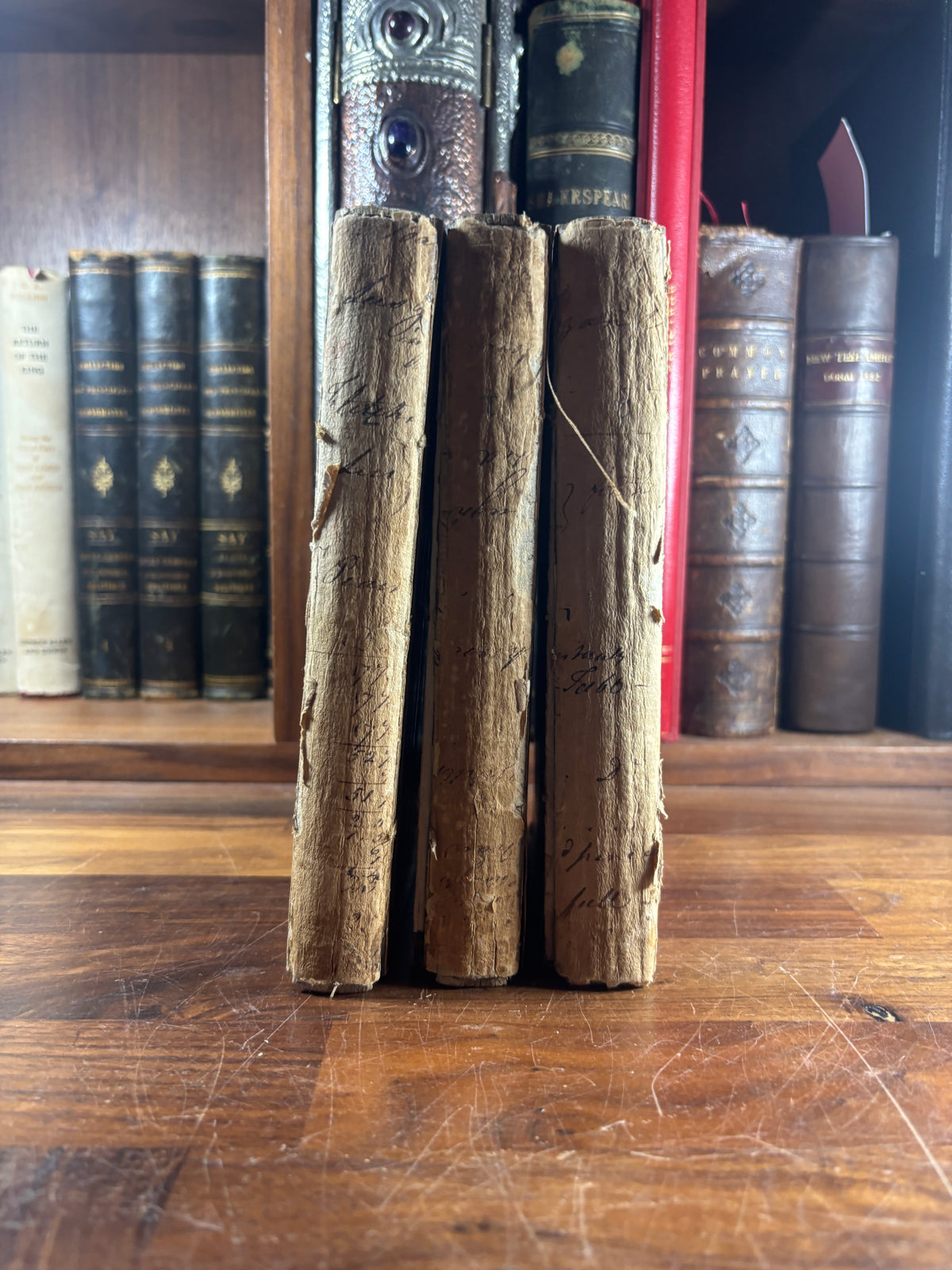
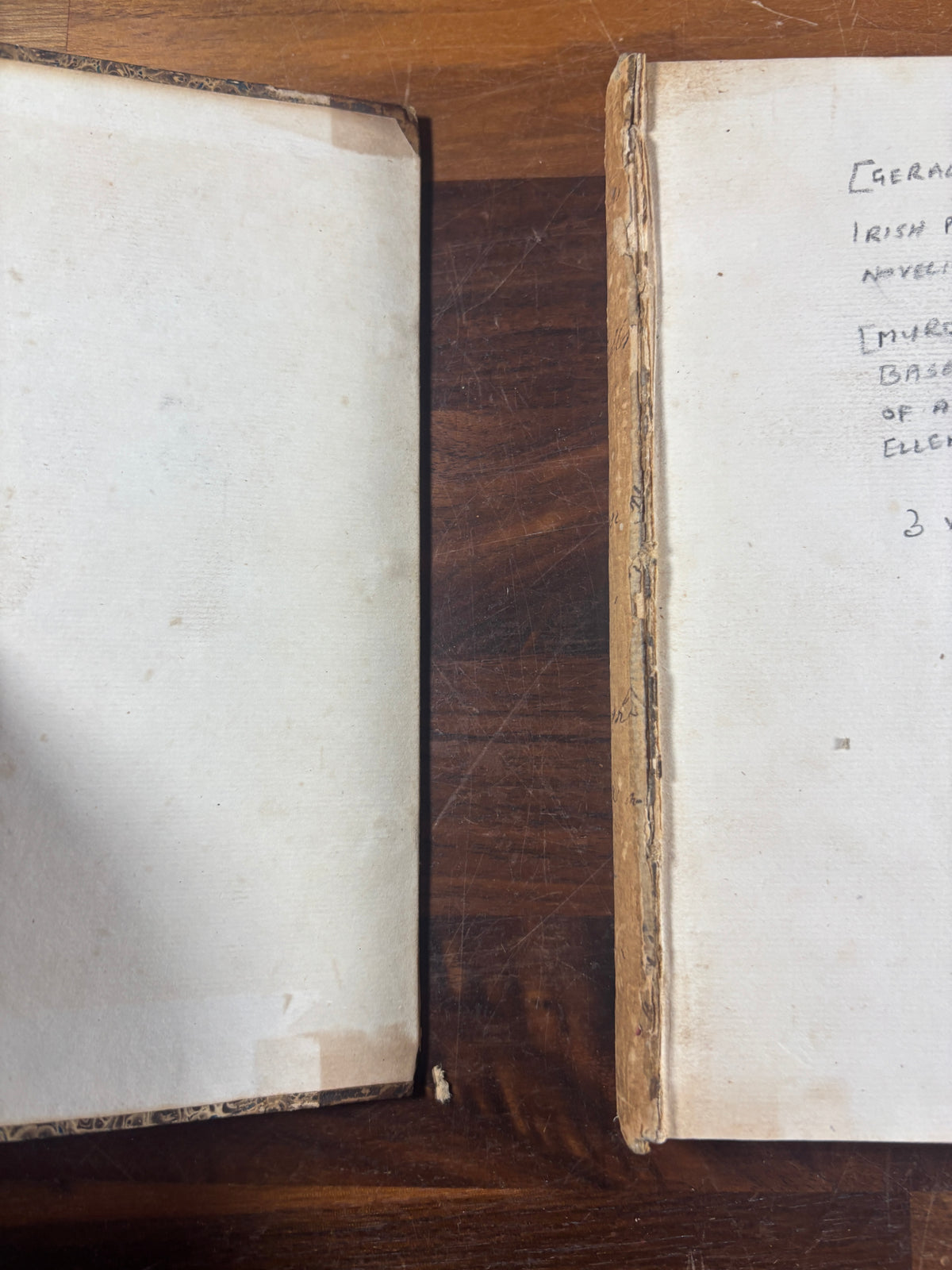
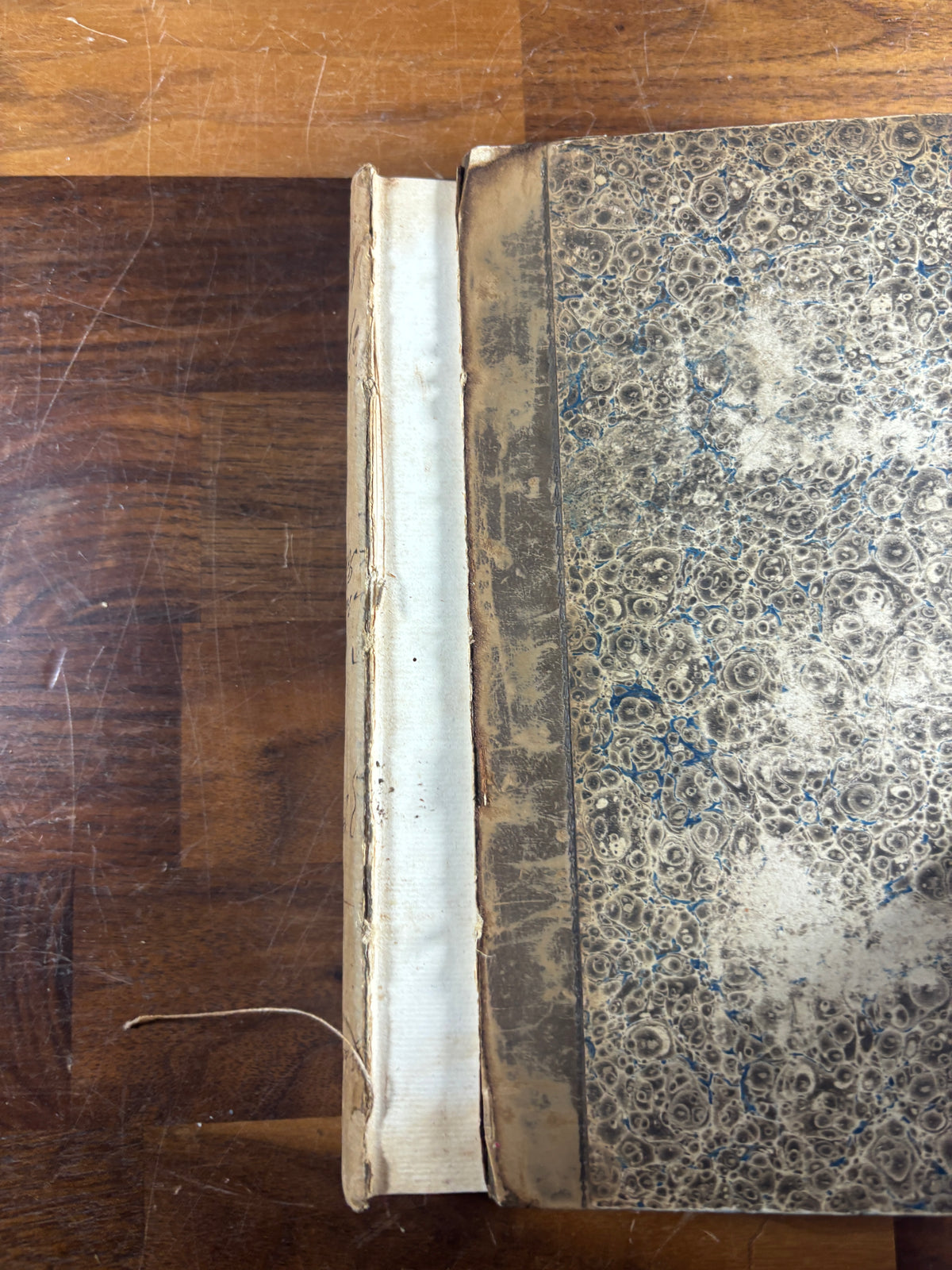
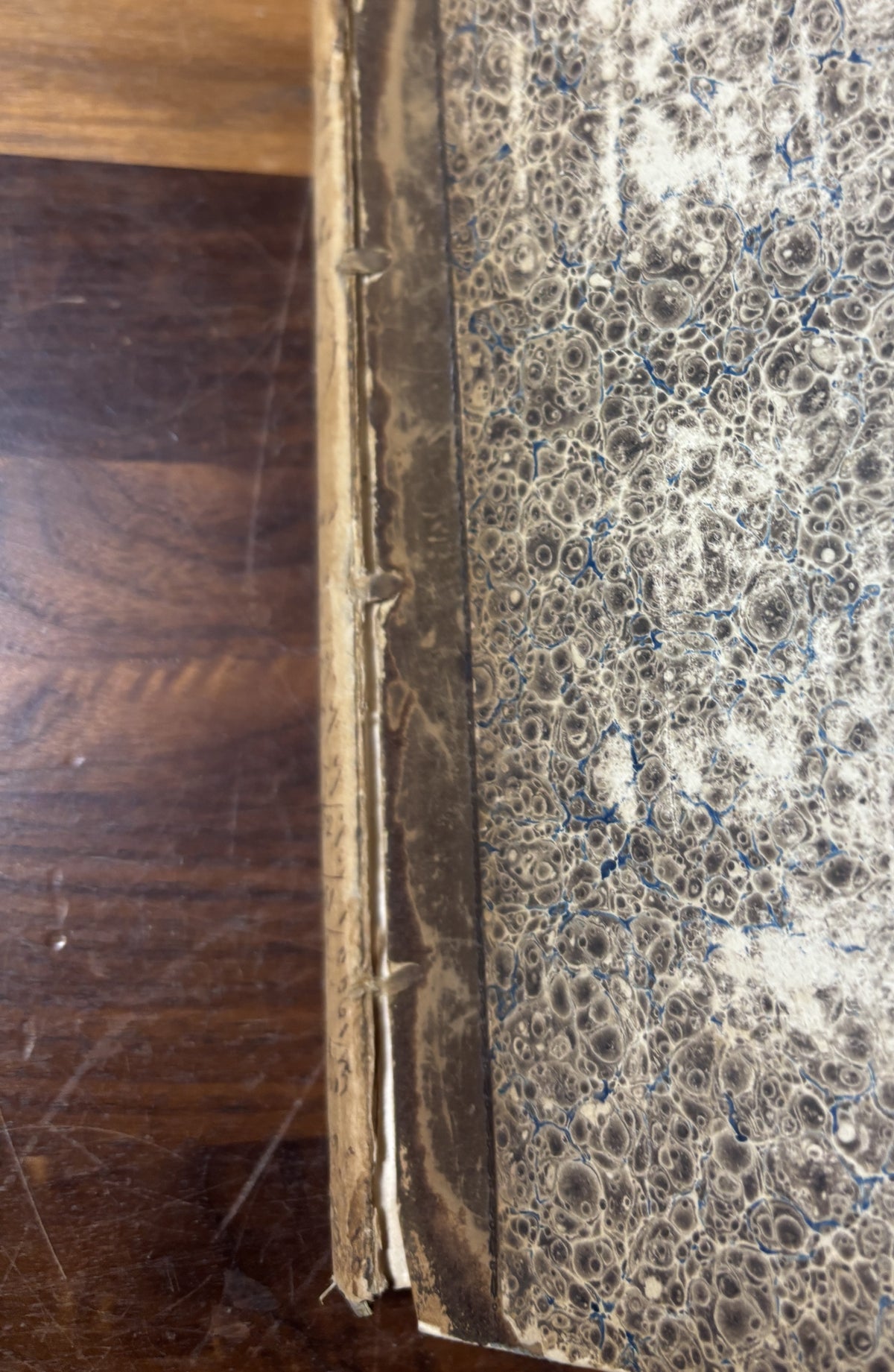
Of particular interest is the near-total loss of the original leather backstrips. This has exposed the underlying construction of the bindings and, unusually, reveals handwritten manuscript waste reused by the original binder as spine lining.
The exposed material contains cursive handwriting, numerical entries and writing in different coloured inks. Such recycling was a practical part of historical bookbinding, with obsolete correspondence, accounts and other manuscript material frequently reused as structural material within bindings.
Normally these fragments would have remained completely concealed beneath the leather. Their exposure provides a fascinating glimpse into the construction of an early nineteenth-century book.
Condition
Poor binding condition, offered as an unrestored historical set.
All three volumes are present. The original/period marbled paper-covered boards survive with leather corners and remnants of the leather binding. The leather backstrips are substantially or entirely lost, exposing the manuscript spine linings and binding structure beneath. Boards and joints are heavily worn, with detached or substantially weakened boards and exposed sewing in places.
Internally there is considerable age-related foxing and spotting, particularly to the preliminary leaves and title pages, together with general toning and signs of use consistent with a nearly 200-year-old set.
The bindings would benefit from sympathetic conservation. The exposed manuscript spine material is an interesting feature in its own right and ideally should be preserved rather than concealed or removed during restoration.
Why Buy This Set?
Despite its distressed condition, this is an appealing piece of early nineteenth-century literary and bookbinding history: a complete three-volume second edition from 1829, published in the same year as the first edition, of Griffin's best-known novel.
The combination of its connection with a notorious Irish murder, its subsequent influence on Victorian theatre and the unusual exposure of recycled manuscript material within the original bindings makes this a particularly characterful survivor.
Dimensions (for all three):
- Weight - 1.26kg
- Height - 19cm
- Width - 12.3cm
- Thickness - 7.5cm
Share