Momo Rare Books
Biblia Pauperum Limited American Edition 1885 No. 327 of 375
Biblia Pauperum Limited American Edition 1885 No. 327 of 375
Couldn't load pickup availability
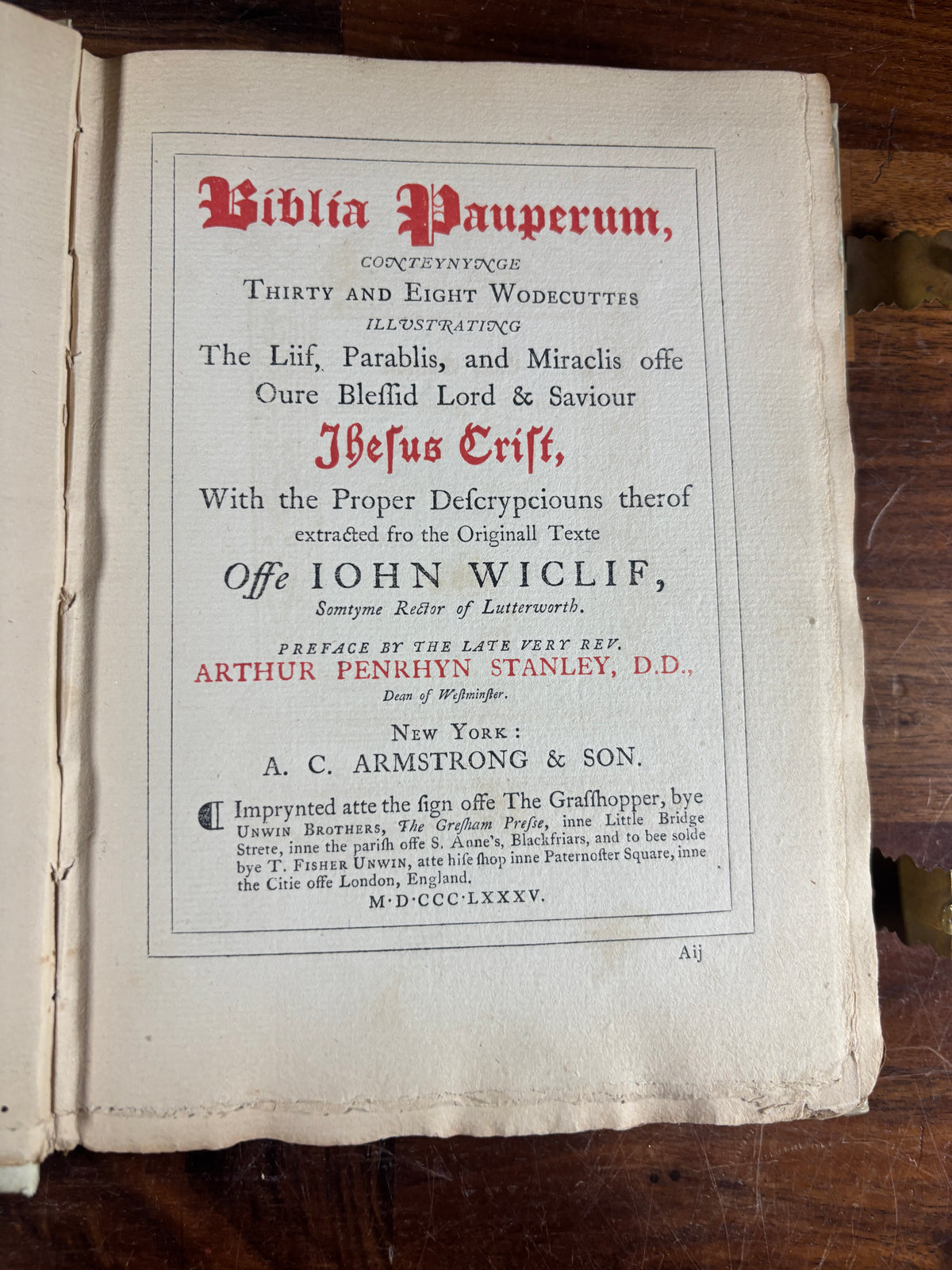
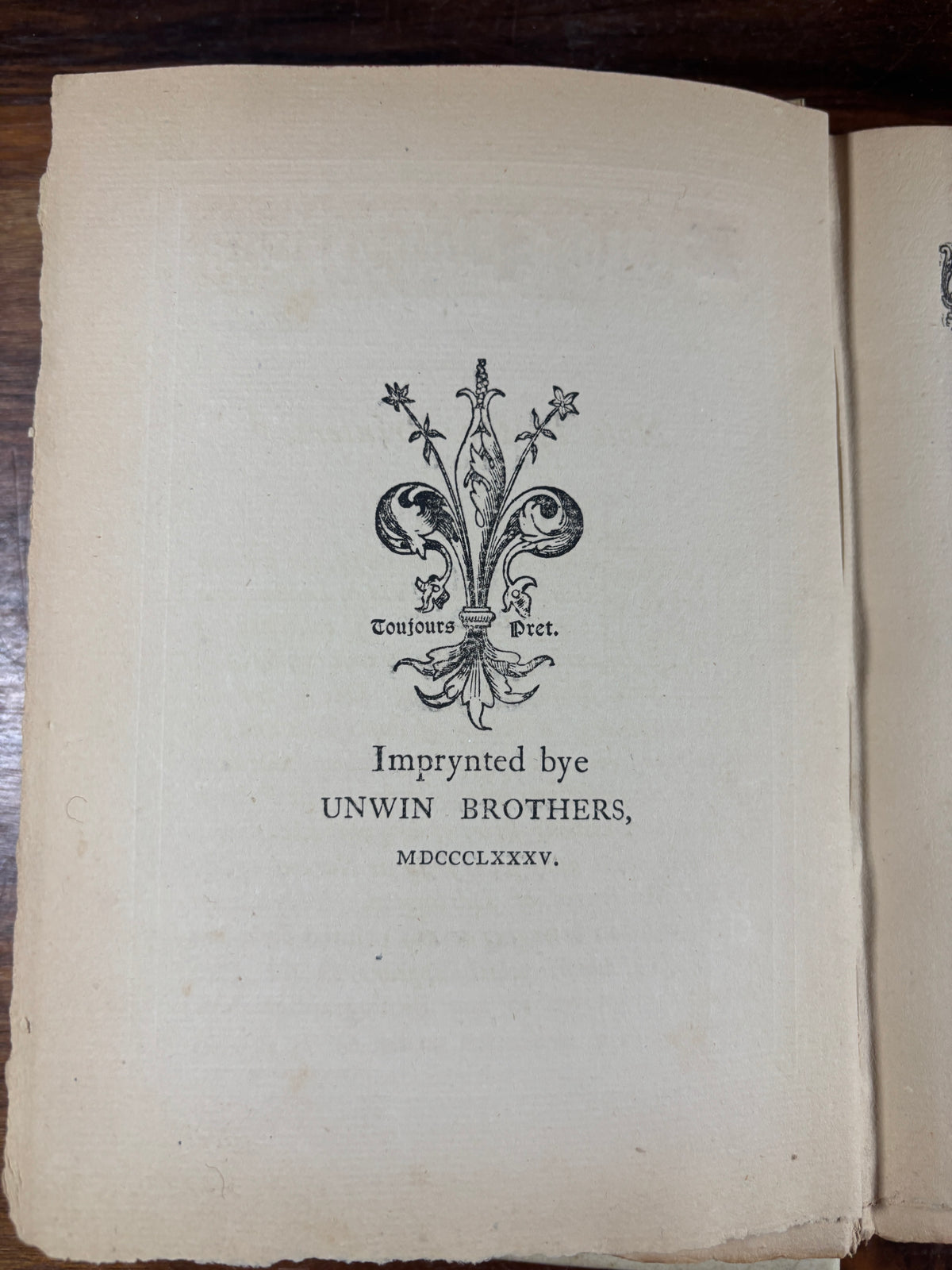
A beautiful and unusually decorative 1885 limited edition of the Biblia Pauperum, printed by Unwin Brothers at the Gresham Press, London, for A. C. Armstrong & Son of New York.
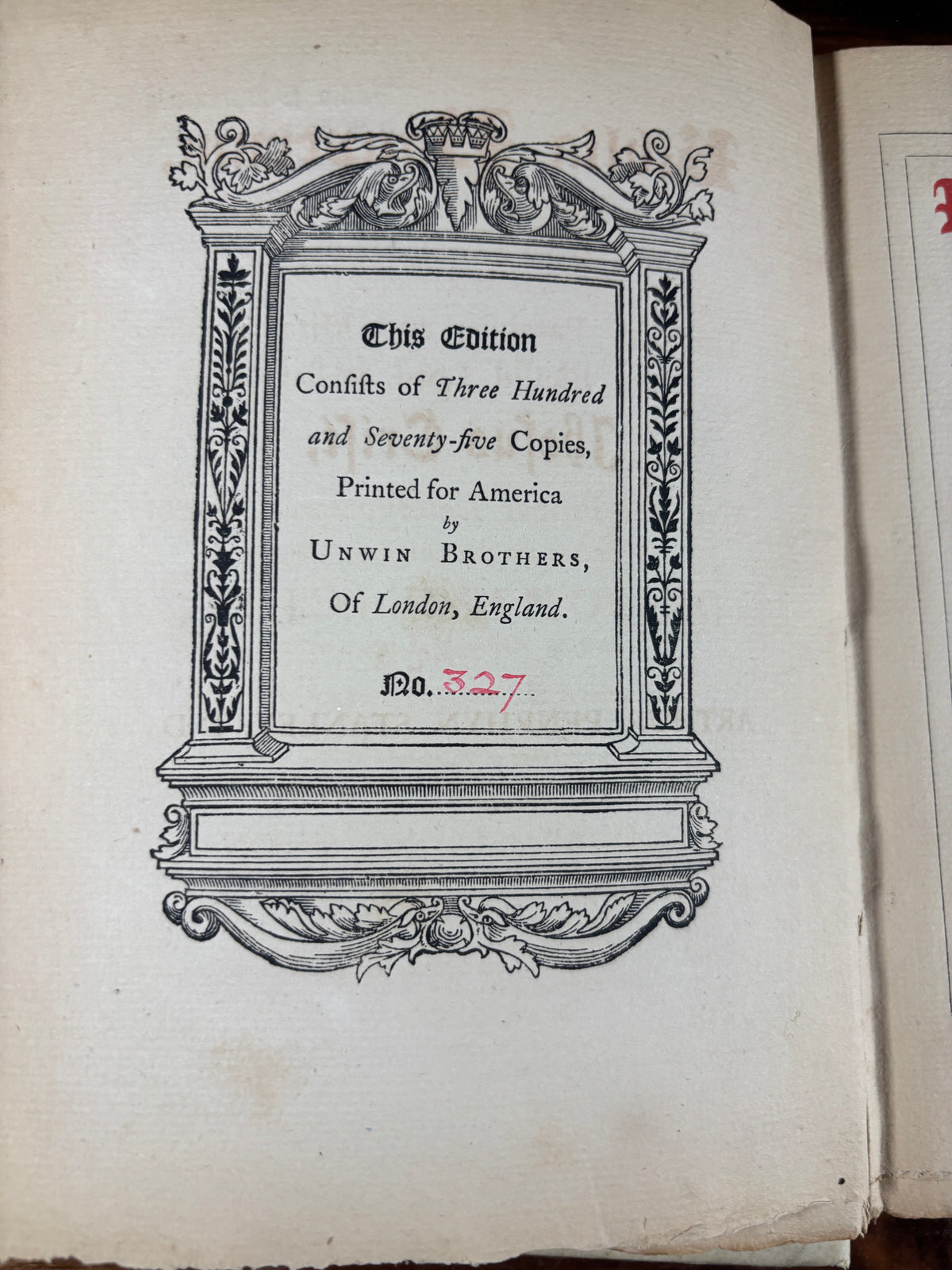
This edition was restricted to just 375 copies printed for America, with this example individually numbered 327.
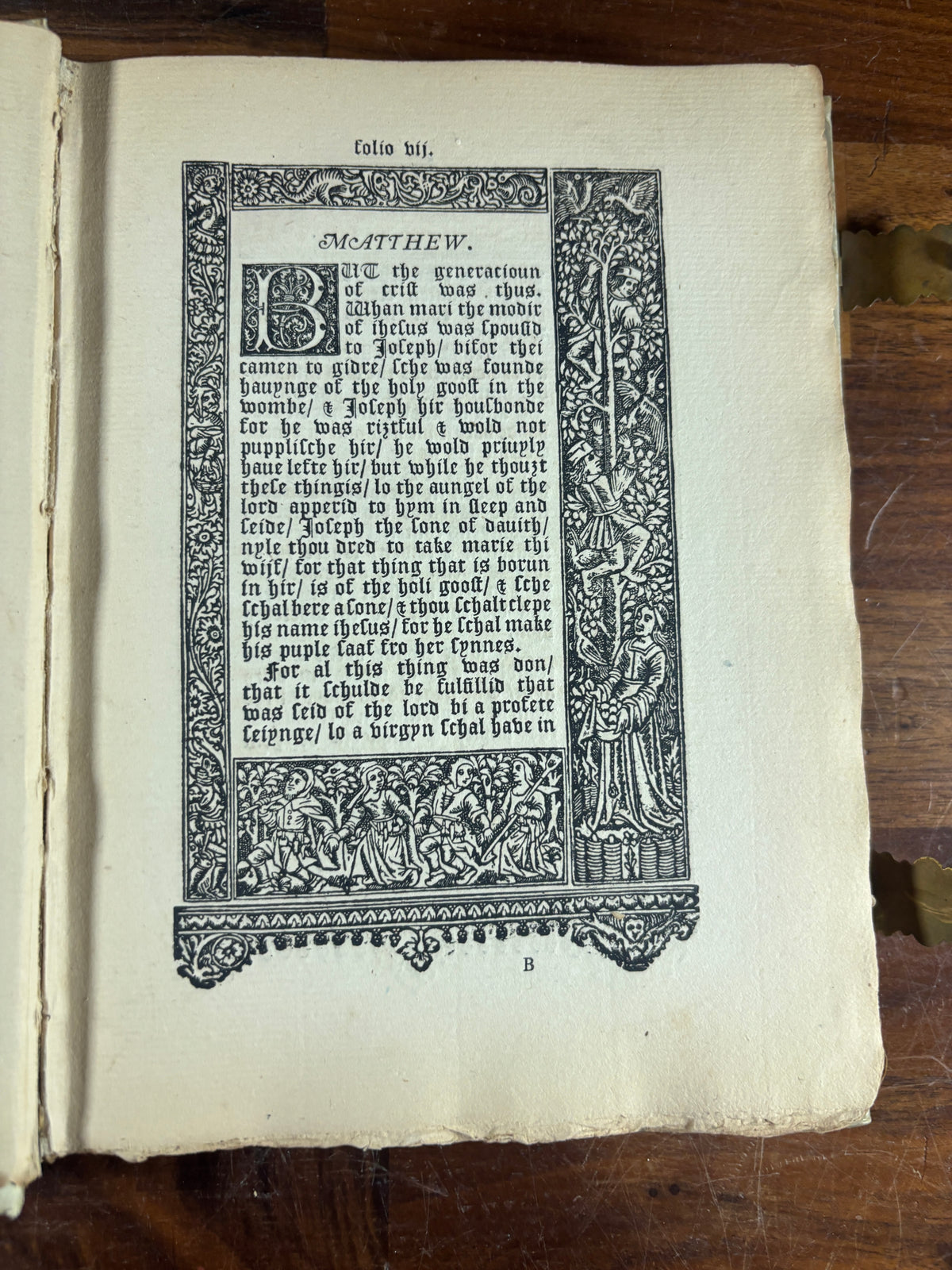
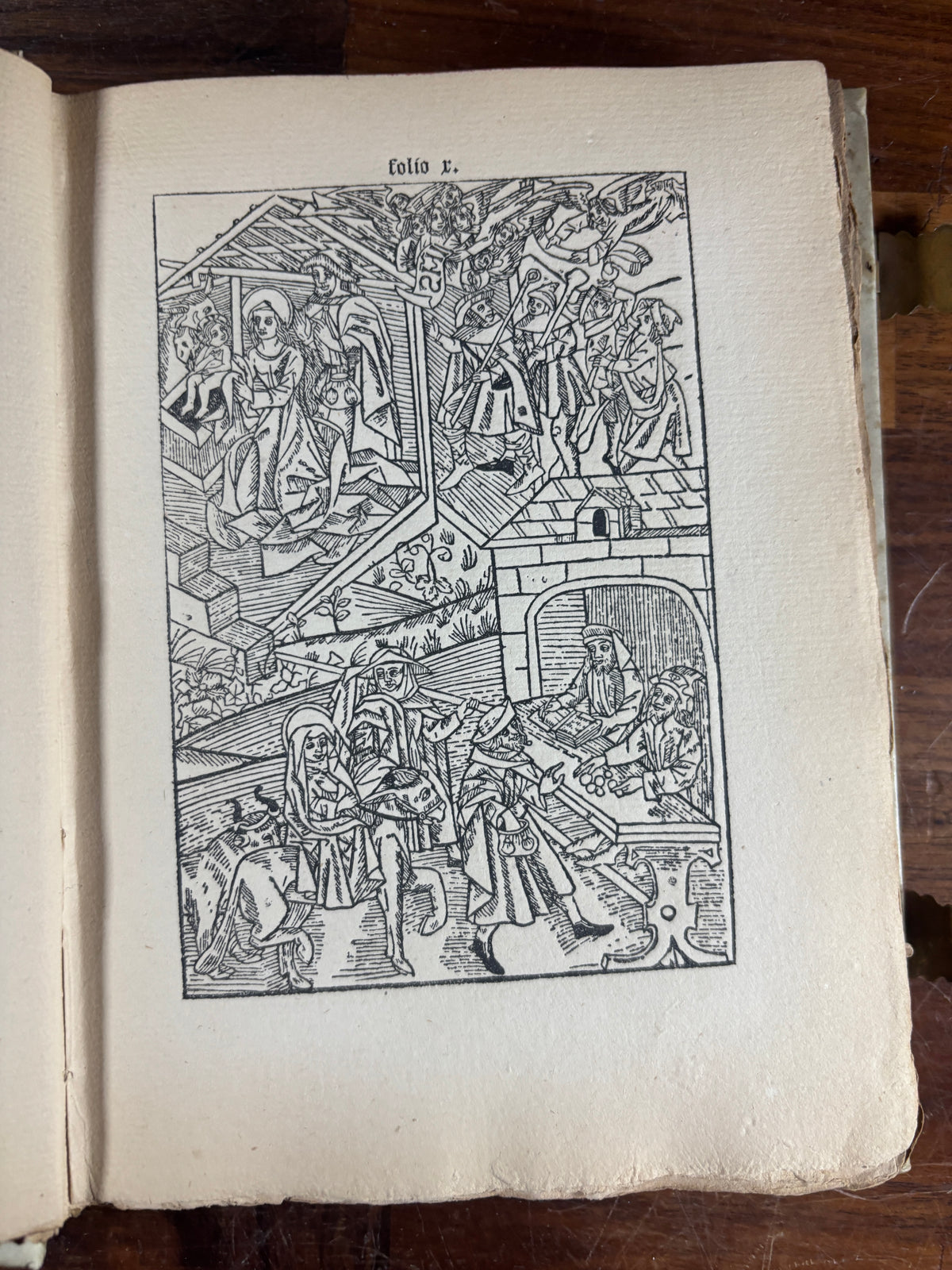
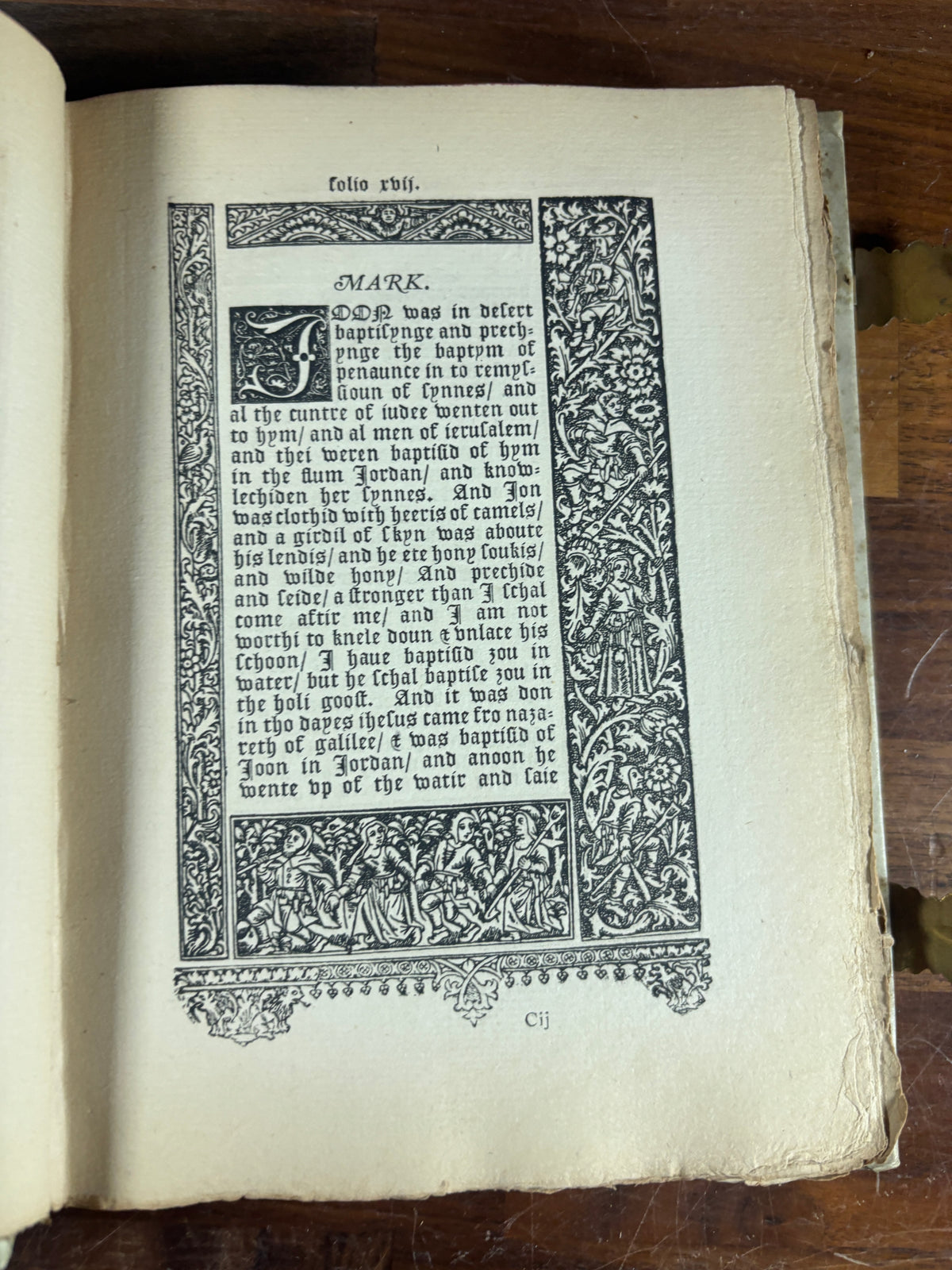
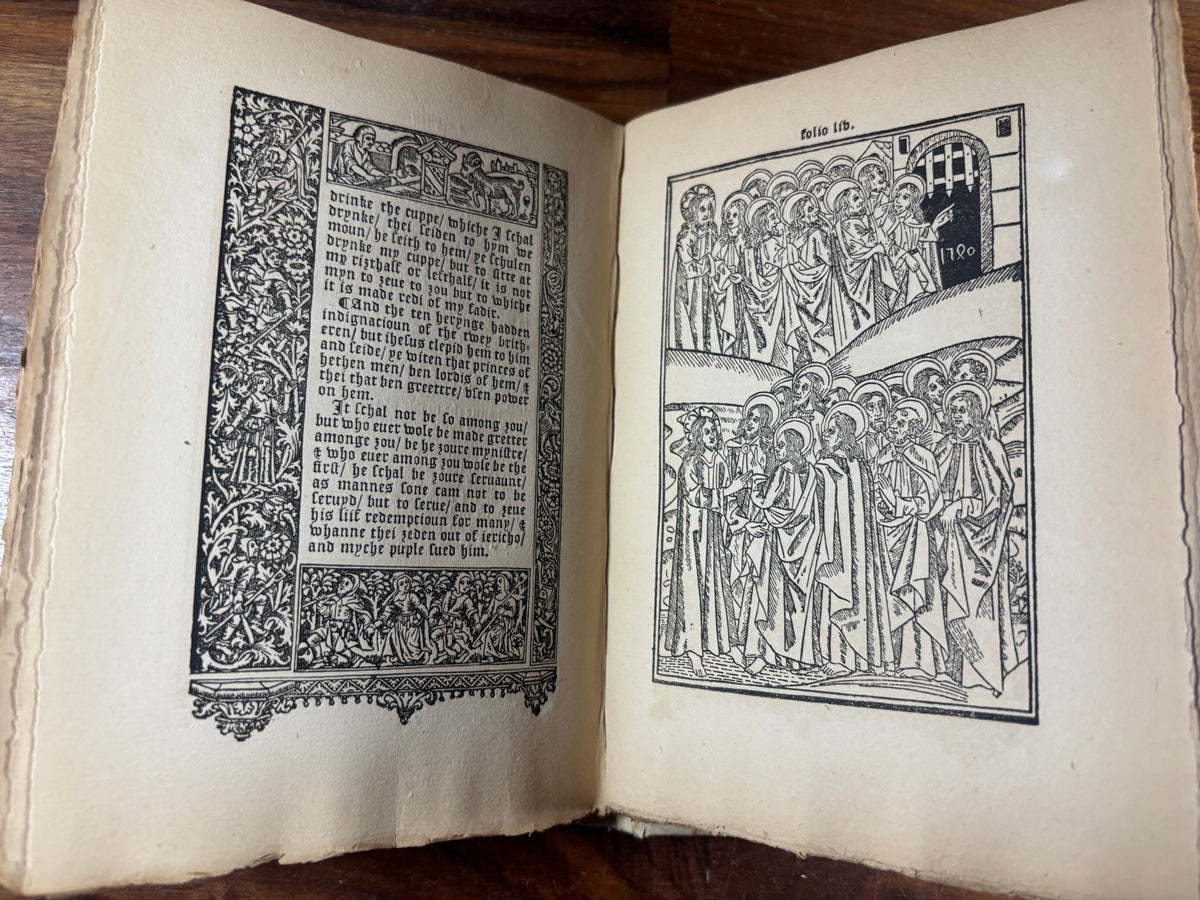
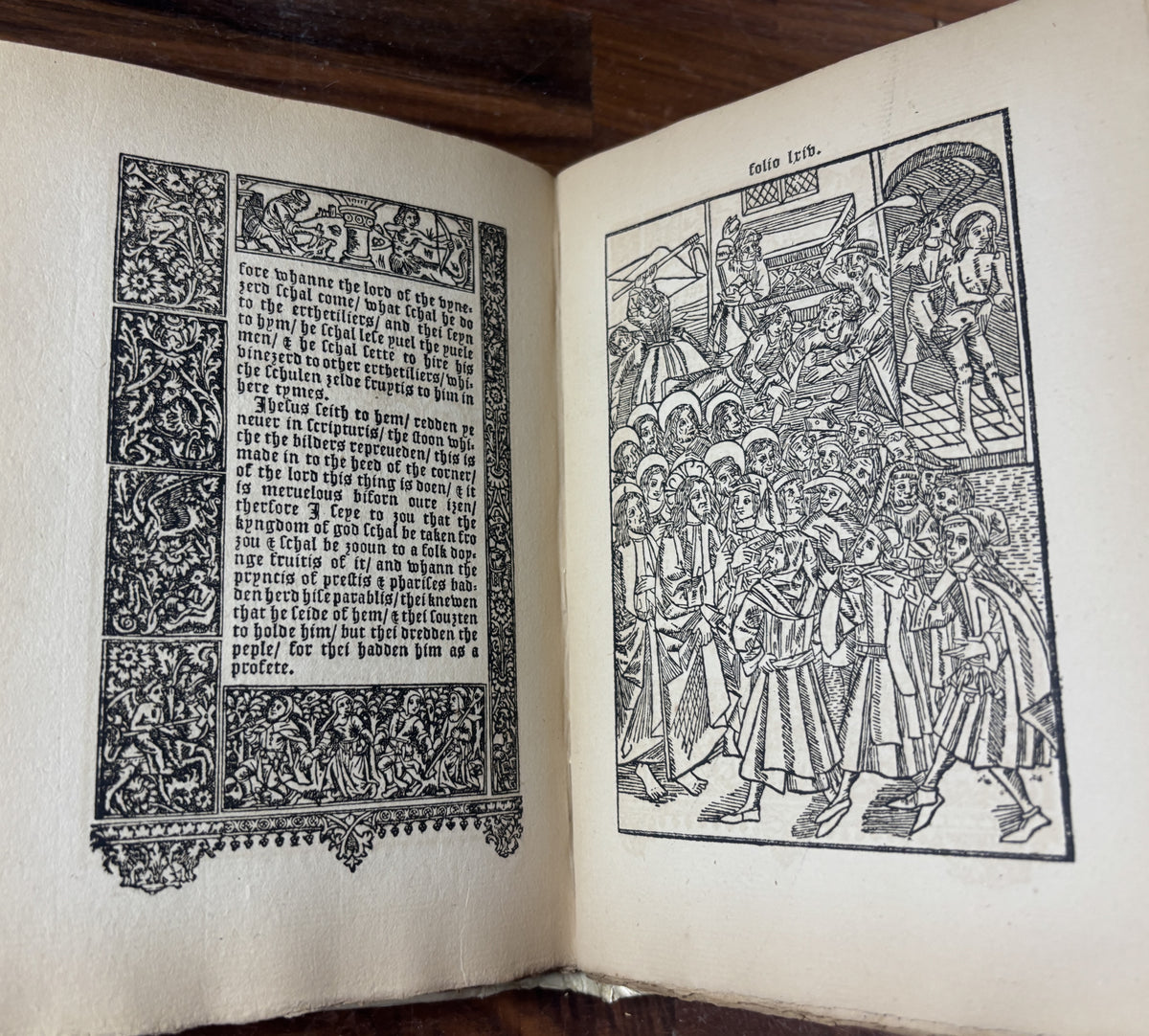
Containing thirty-eight woodcut illustrations, the work recreates the appearance and character of some of the earliest illustrated biblical books. The illustrations depict the life, parables and miracles of Jesus Christ, accompanied by biblical text derived from John Wycliffe.
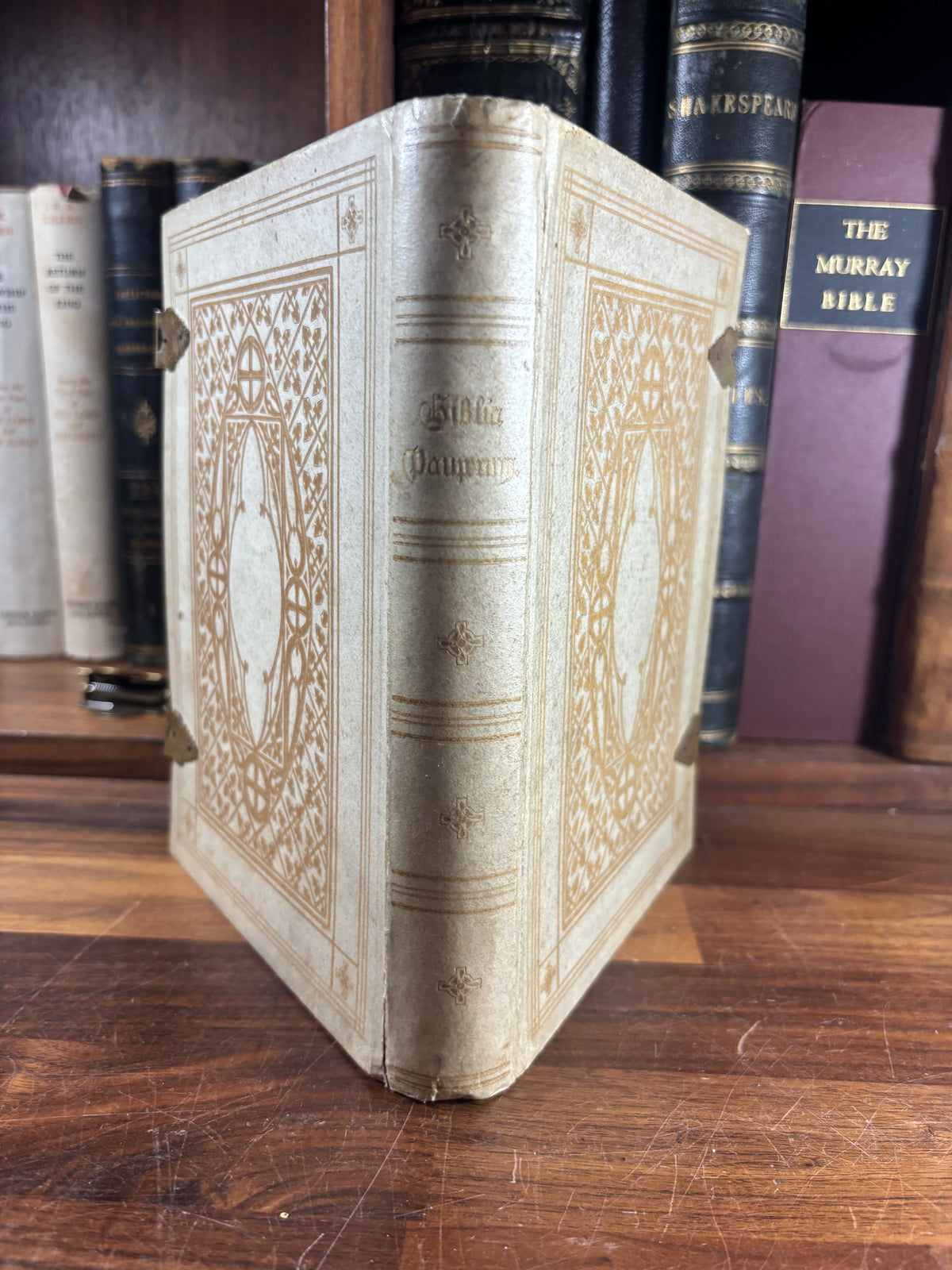
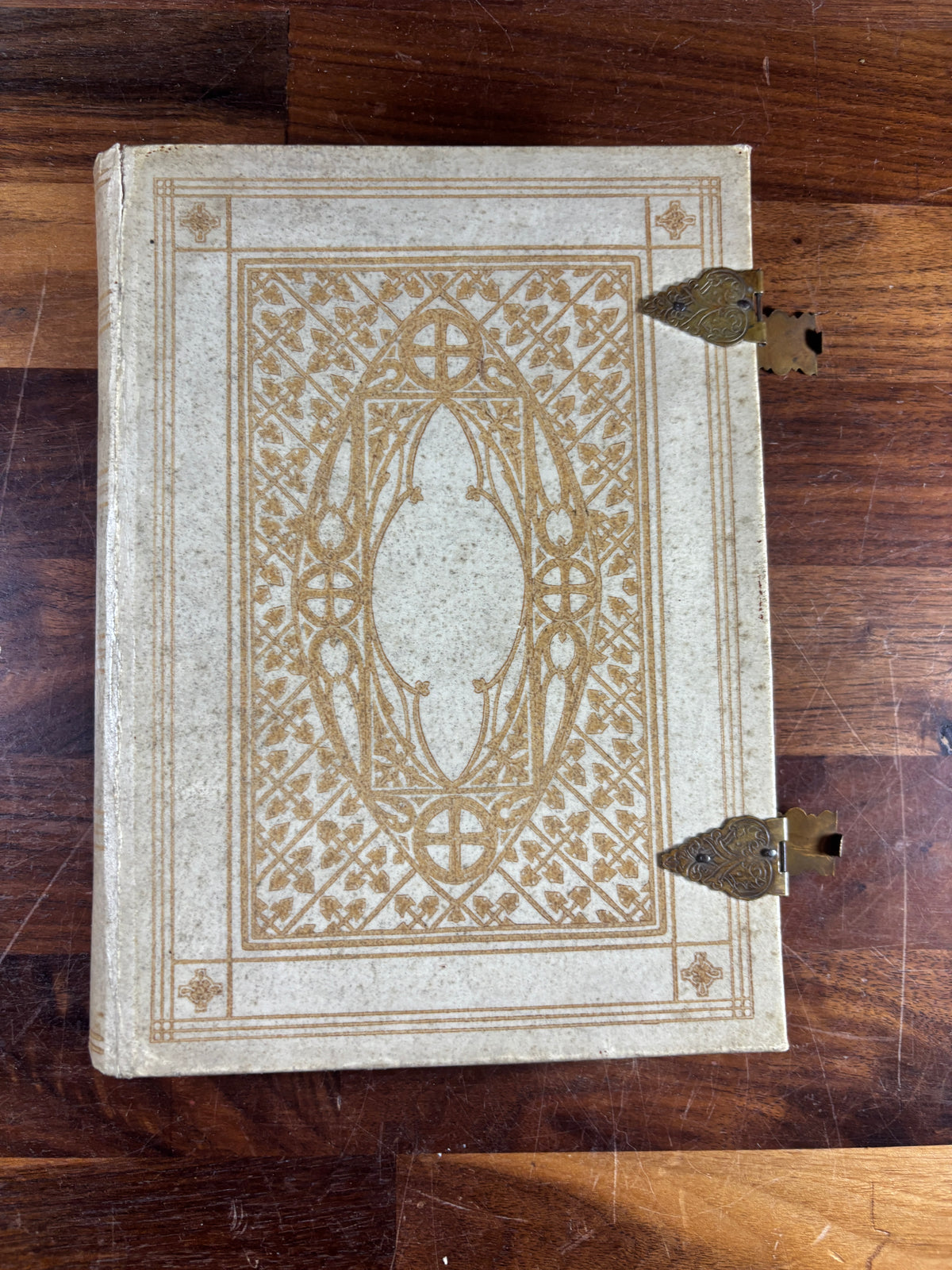
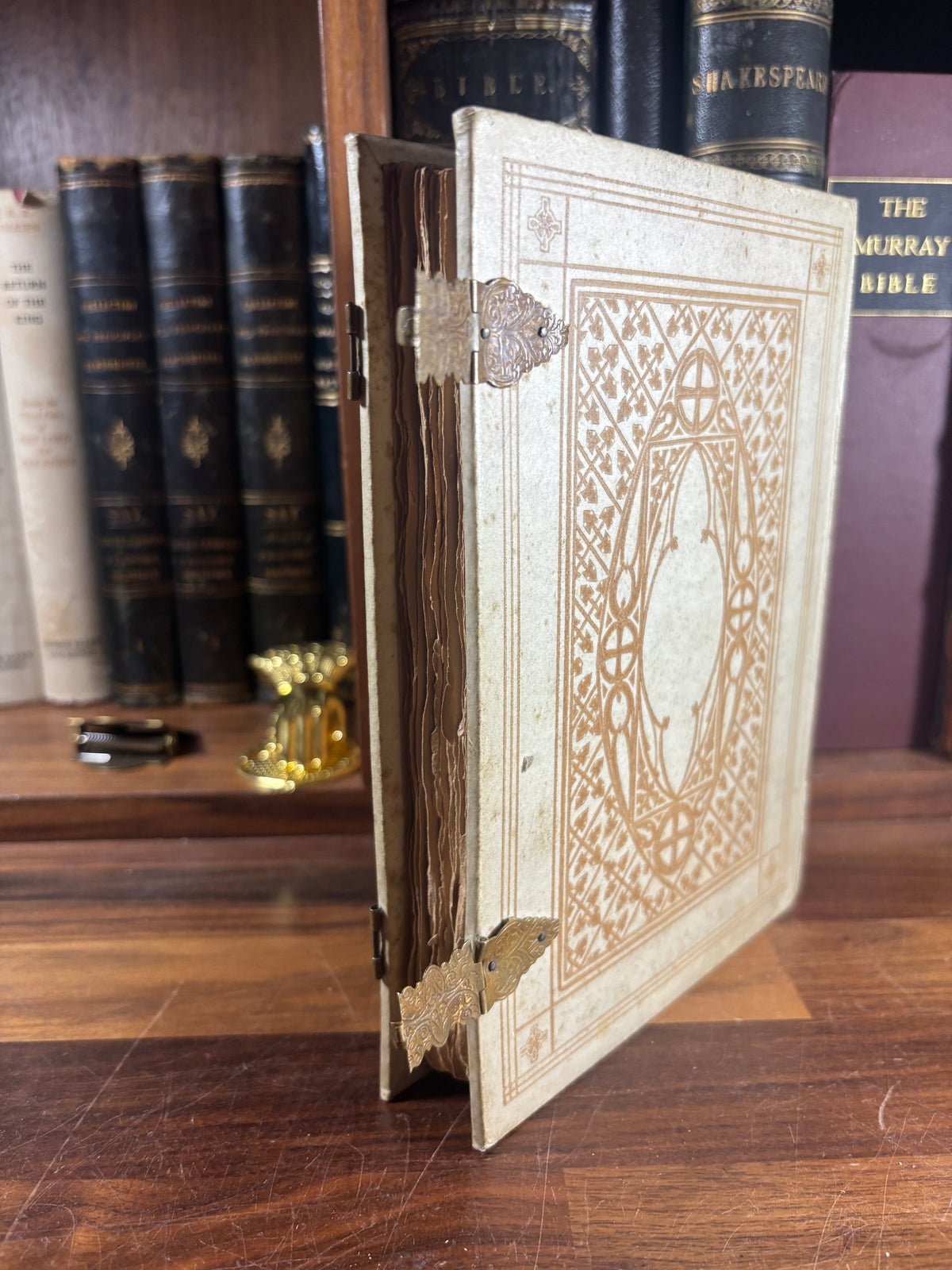
The volume is particularly attractive in its elaborate cream parchment-style binding, extensively decorated in gilt in a Gothic design and retaining its two ornate brass clasps. Internally, it is printed on heavy handmade-style paper with untrimmed edges, deliberately recalling the appearance of early printed books.
The Biblia Pauperum
The Biblia Pauperum, or "Bible of the Poor", was a form of highly illustrated biblical book particularly associated with the later Middle Ages and the earliest period of European printing.
Rather than presenting the complete biblical text, these works used illustrations alongside shorter passages of scripture to communicate biblical narratives and theological ideas.
The tradition became especially important during the 15th century, when examples were produced as so-called block books, in which illustrations and sometimes text were cut into wooden blocks and printed onto paper.
This 1885 edition was created during the Victorian revival of interest in medieval manuscripts, incunabula and the origins of European printing.
The Woodcuts and the 1877 Caxton Celebration
The history behind the illustrations is particularly fascinating.
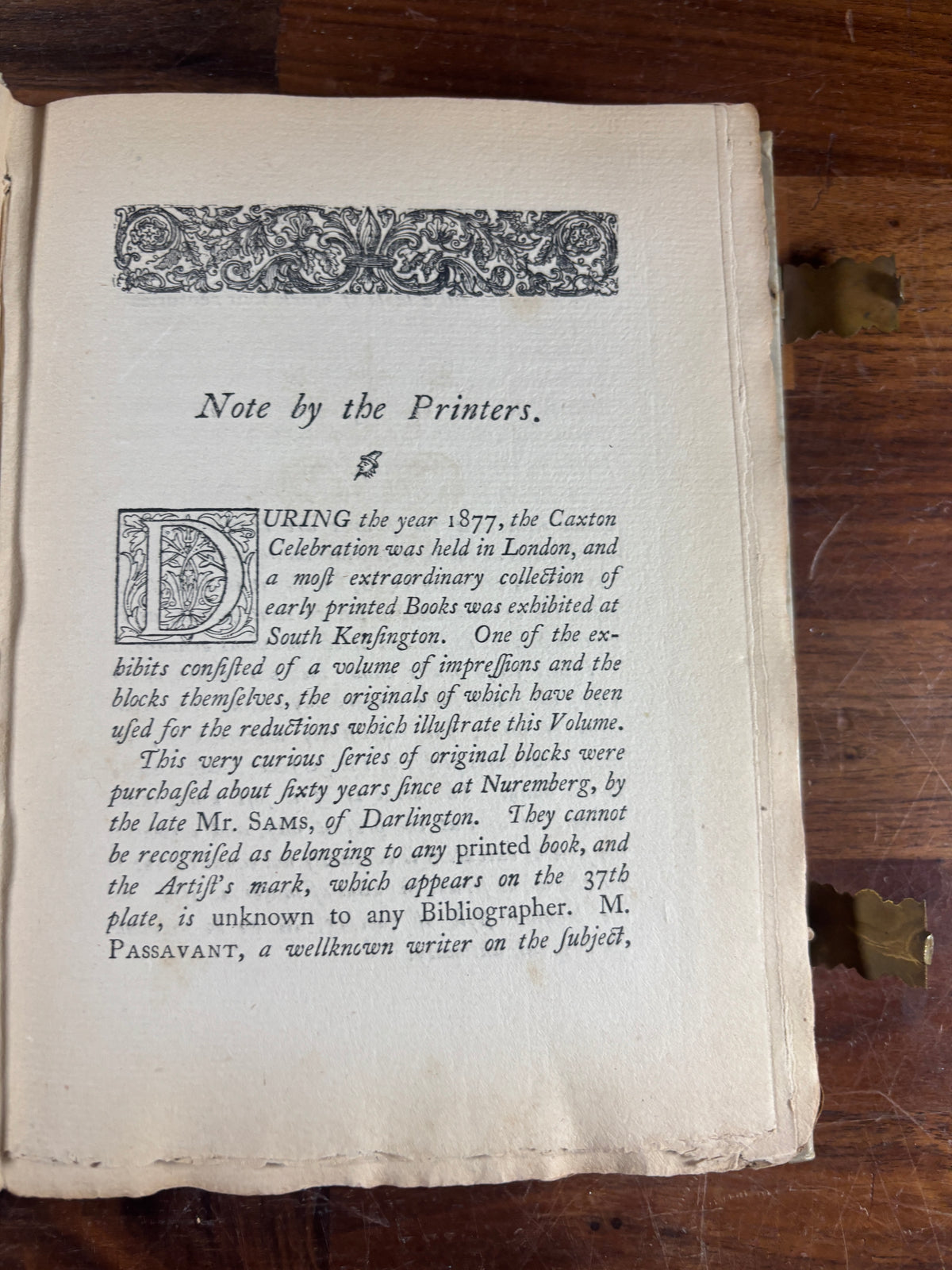
The printer's note records that during the great Caxton Celebration of 1877 in London, a remarkable collection of early printed books was exhibited at South Kensington. Among the exhibits was a volume of impressions accompanied by the woodblocks from which they had reportedly been produced.
These blocks had apparently been purchased in Nuremberg approximately sixty years earlier by Mr Sams of Darlington.
Their precise origins were already uncertain when this edition was produced. The printers themselves acknowledged that the blocks could not confidently be associated with a known early printed book and that the artist's mark appearing upon the thirty-seventh plate remained unidentified.
The resulting mystery formed part of the fascination surrounding the illustrations and their subsequent reproduction in the present work.
A Victorian Recreation of Early Printing
Considerable effort was made to give the book the appearance of a much earlier production.
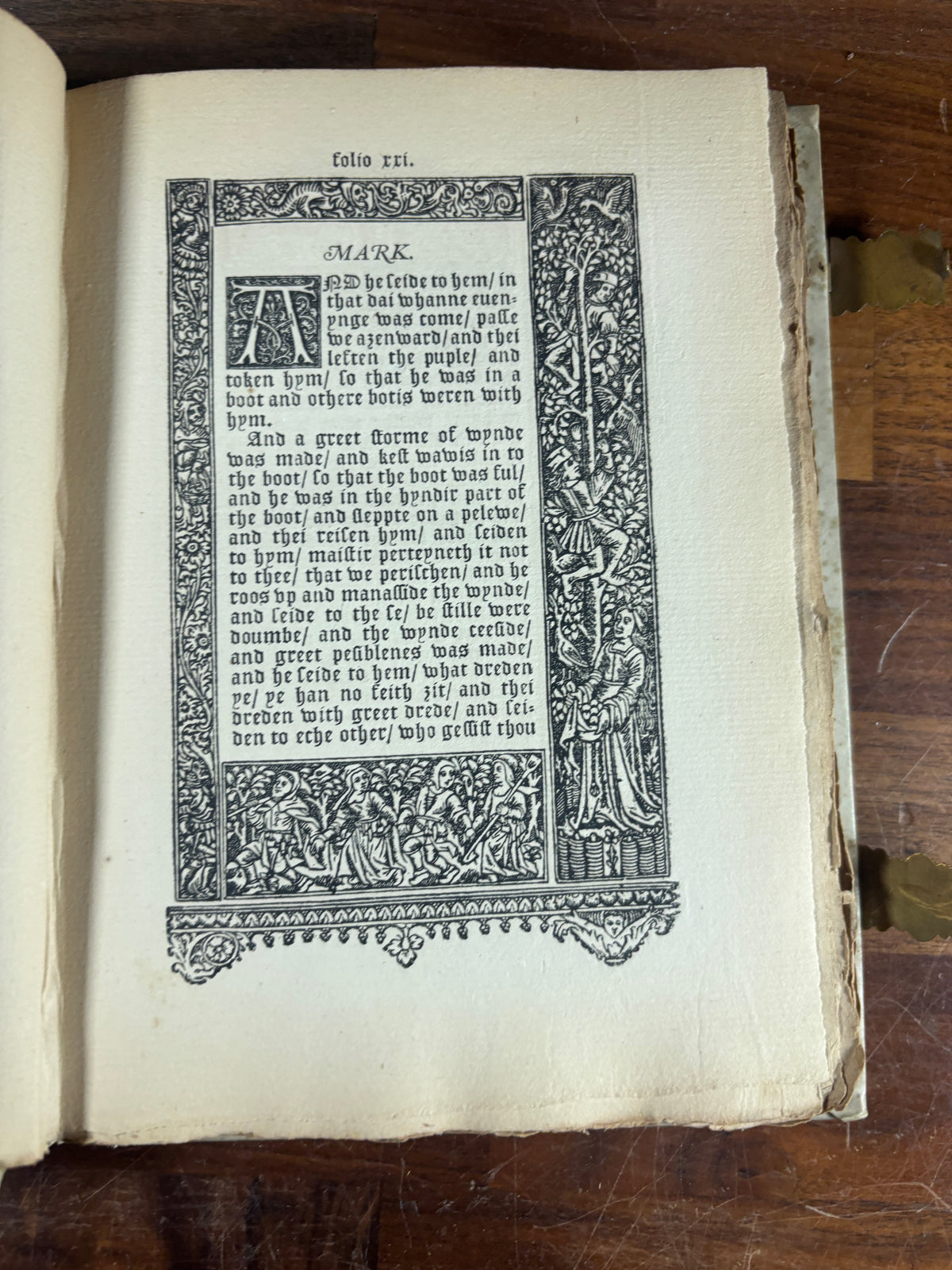
The biblical text uses deliberately archaic typography and spelling derived from the writings associated with John Wycliffe, while elaborate borders, initials and ornamental devices reproduce the appearance of late-medieval and early Renaissance printing.
The volume was also printed on substantial handmade-style paper with rough, untrimmed edges, further enhancing its antiquarian character.
The result is not simply a reproduction of biblical illustrations, but a remarkable Victorian attempt to recreate the visual and physical experience of an early printed devotional book.
Arthur Penrhyn Stanley
The volume includes a preface by the Very Rev. Arthur Penrhyn Stanley (1815–1881), the influential Victorian churchman, historian and Dean of Westminster.
Stanley was one of the prominent ecclesiastical figures of Victorian Britain and was closely associated with Westminster Abbey for nearly two decades.
Limited Edition
The limitation leaf states:
"This Edition Consists of Three Hundred and Seventy-five Copies, Printed for America by Unwin Brothers, Of London, England."
This example is individually numbered:
No. 327
The small limitation makes this a particularly appealing example for collectors of fine press books, biblical illustration and the history of printing.
Binding
Bound in an elaborate cream parchment/vellum-style binding, extensively decorated in gilt with Gothic architectural and foliate motifs.
The spine bears gilt decoration and the title Biblia Pauperum.
Most notably, the volume retains its two decorative brass clasps and catches, giving the binding an intentionally medieval appearance and making the book particularly attractive when displayed.
Condition
A very attractive surviving example.
The pale binding displays expected age-related spotting, toning, marks and general handling wear. There is some rubbing and wear around the extremities and spine consistent with age.
The gilt decoration remains clearly visible and attractive, and both decorative brass clasps are retained.
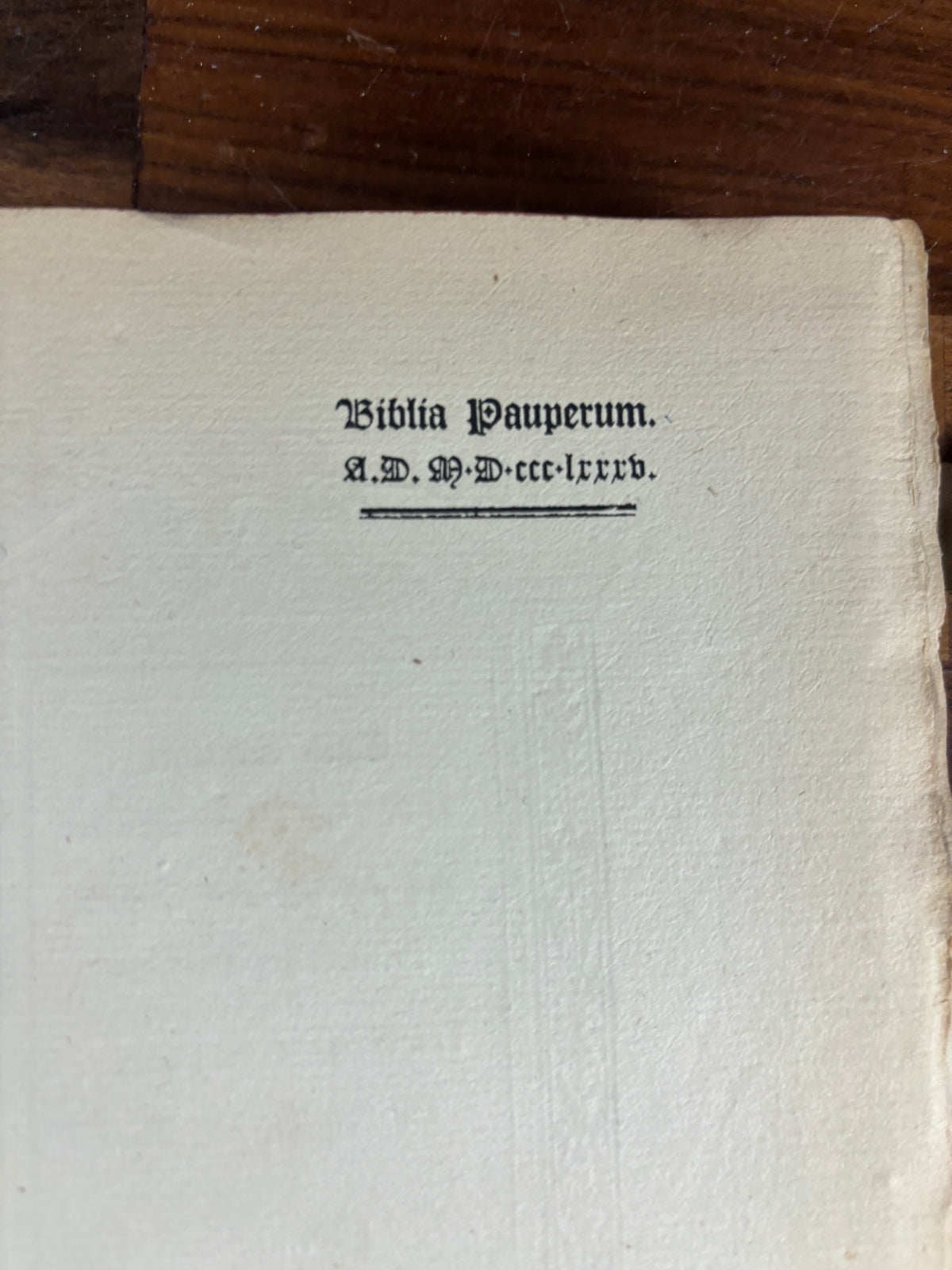
Internally, the handmade-style paper remains generally clean and presents extremely well, with occasional light spotting, toning and age-related marks. The rough and irregular deckled edges are an intentional feature of the production.
The woodcut illustrations remain remarkably bold and crisp.
Please examine the supplied photographs carefully.
Publication Details
Title: Biblia Pauperum
Text: Extracted from John Wycliffe
Preface: Arthur Penrhyn Stanley, D.D., Dean of Westminster
Printer: Unwin Brothers, Gresham Press
Publisher: A. C. Armstrong & Son
Place: London / New York
Date: 1885
Illustrations: 38 woodcuts
Edition: Limited American edition of 375 copies
Copy: No. 327 of 375
Binding: Decorated cream parchment/vellum-style binding with gilt decoration and two brass clasps
Why Buy This Copy?
An exceptionally decorative example of the Victorian fascination with the earliest history of the printed book.
Combining 38 medieval-style woodcuts, Wycliffite biblical text, handmade-style paper, Gothic typography, elaborate gilt binding and surviving brass clasps, the volume was consciously designed to evoke a book produced during the infancy of European printing.
Its connection with the 1877 Caxton Celebration gives the work an additional bibliographical interest, while the individually numbered limitation of only 375 copies for America makes this considerably more than an ordinary Victorian biblical facsimile.
A striking addition to a collection devoted to early printing, biblical illustration, medievalism, John Wycliffe, fine press books or the history of the Bible.
Dimensions:
Weight - 484g
Height - 20.7cm
Width - 15.5cm
Thickness - 3cm
Share