Momo Rare Books
1769 King James Bible, First Birmingham Bible, Herbert 1204, Illustrated Folio
1769 King James Bible, First Birmingham Bible, Herbert 1204, Illustrated Folio
Couldn't load pickup availability
1769 King James Bible, First Birmingham Bible, Herbert 1204
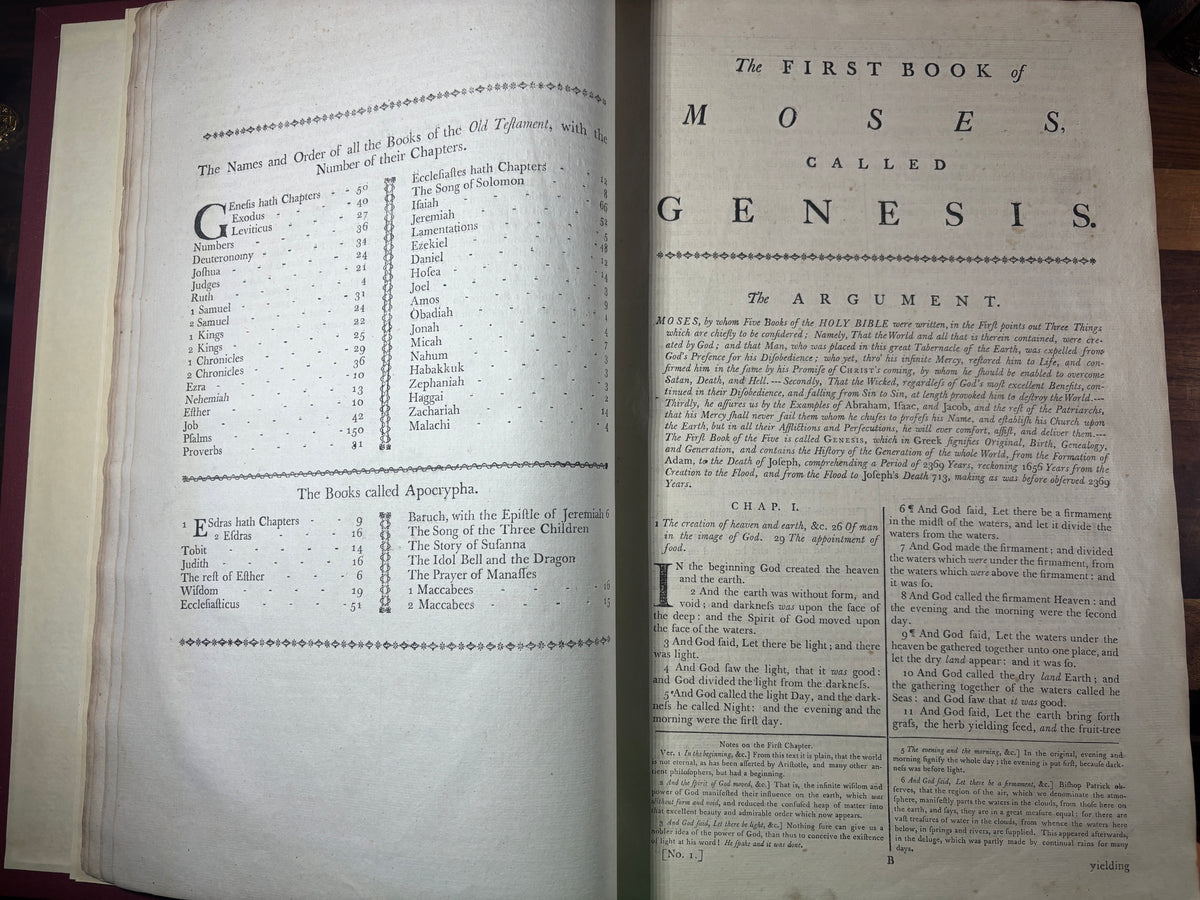
Birmingham: N. Boden and O. Adams, 1769–1770. Folio. King James Version. Herbert 1204.
An important and extensively illustrated eighteenth-century King James Bible, apparently the first complete Bible printed in Birmingham, England. Published by Nicholas Boden and his associates between 1769 and 1770, this substantial folio represents a significant milestone in the history of English provincial printing.
Printed during a period of considerable growth in Birmingham's publishing industry, the Bible appeared amid the city's developing reputation for fine printing, most notably associated with John Baskerville. The publication of Boden's Bible coincided with a rivalry between Boden and Baskerville, whose competing biblical publications contributed to Birmingham's emergence as an important centre of eighteenth-century printing.
Identified as Herbert 1204, this edition is distinguished by its large folio format, elaborate copperplate engravings, extensive biblical commentary, and historical importance as an early Birmingham printing of the complete King James Bible.
Bibliographic overview:
- Author / Translation - King James Version
- Printer - Boden and Adams
- Publication date - 1769–1770
- Place of publication - Birmingham, England
- Format - Folio
- Binding - Later half calf and canvas
- Bibliography - Herbert 1204
- Illustrations - 19 full-page engravings
Printing and Bibliographical History
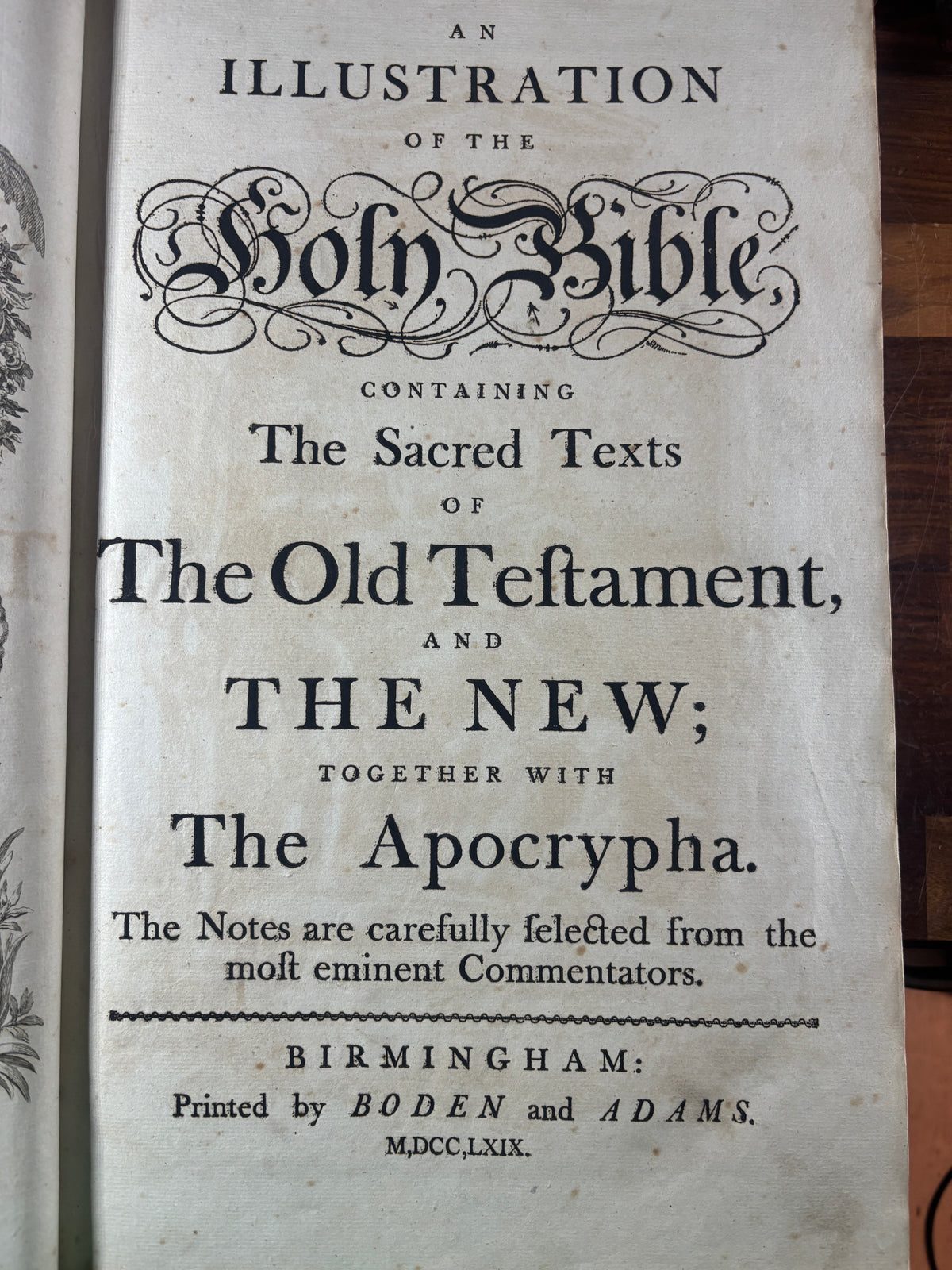
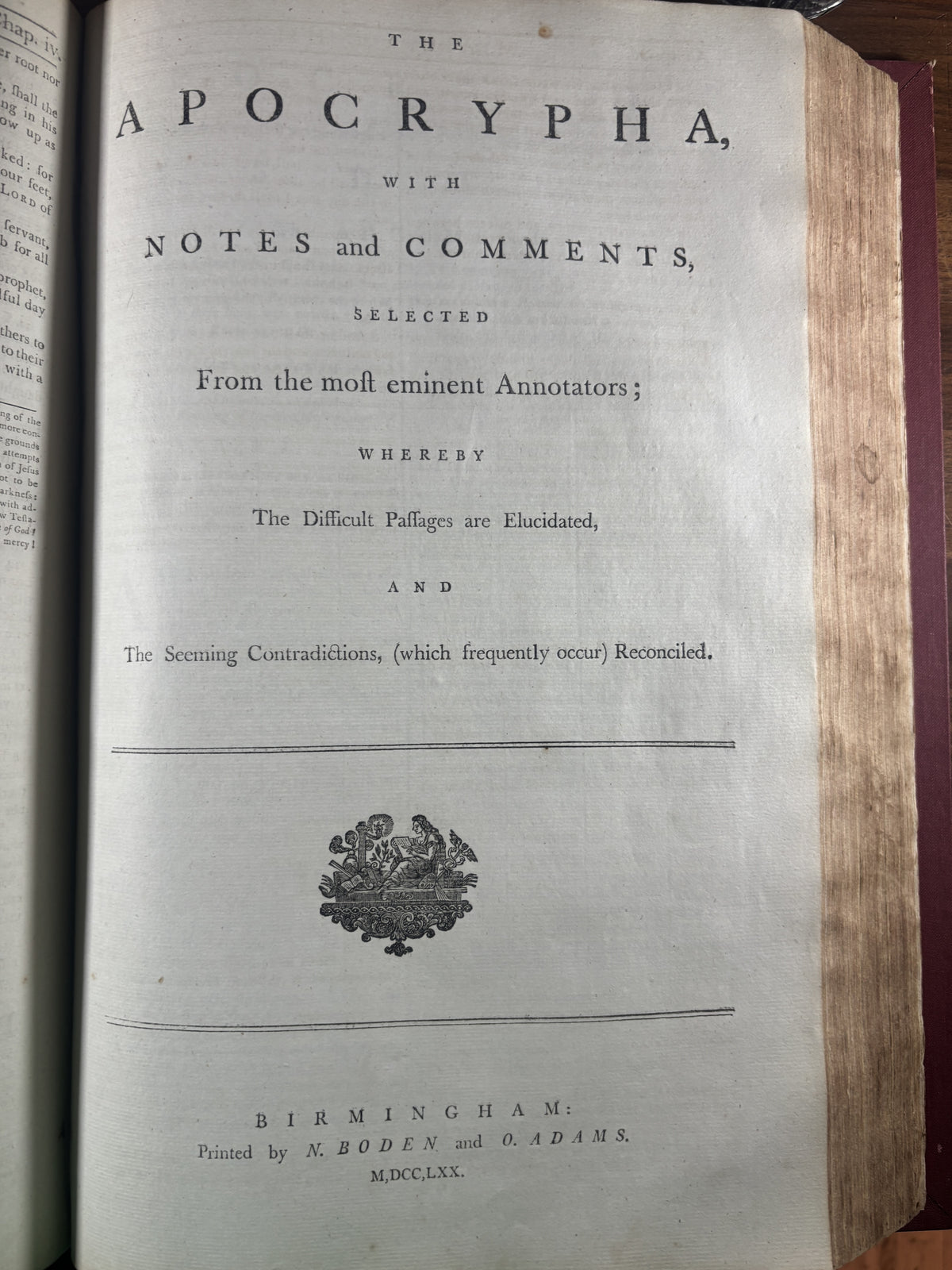
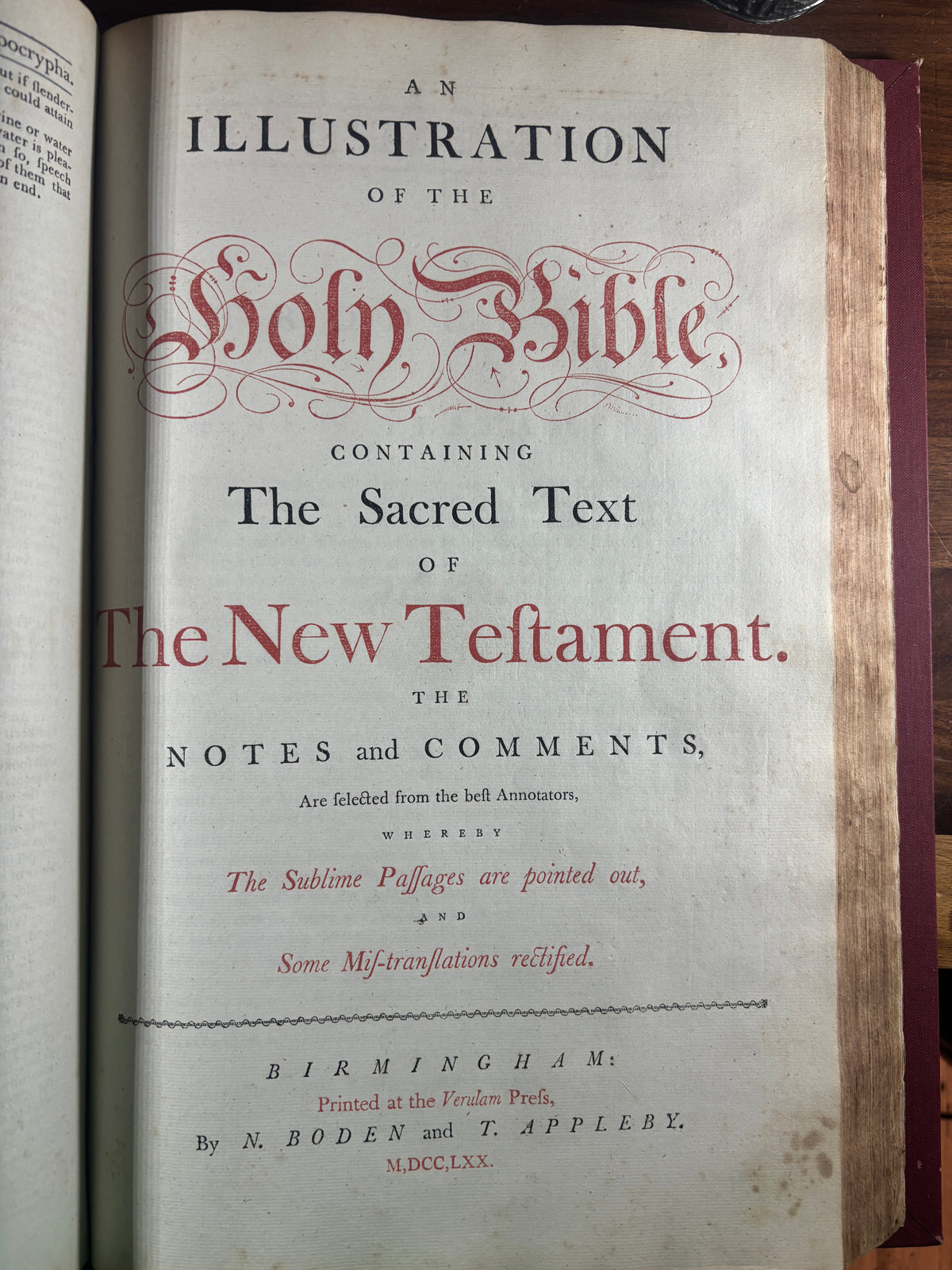
The Bible was printed in Birmingham between 1769 and 1770, with separately dated title pages for its principal sections:
-
Old Testament and general title: Birmingham, Boden and Adams, 1769.
-
Apocrypha: Birmingham, N. Boden and O. Adams, 1770.
-
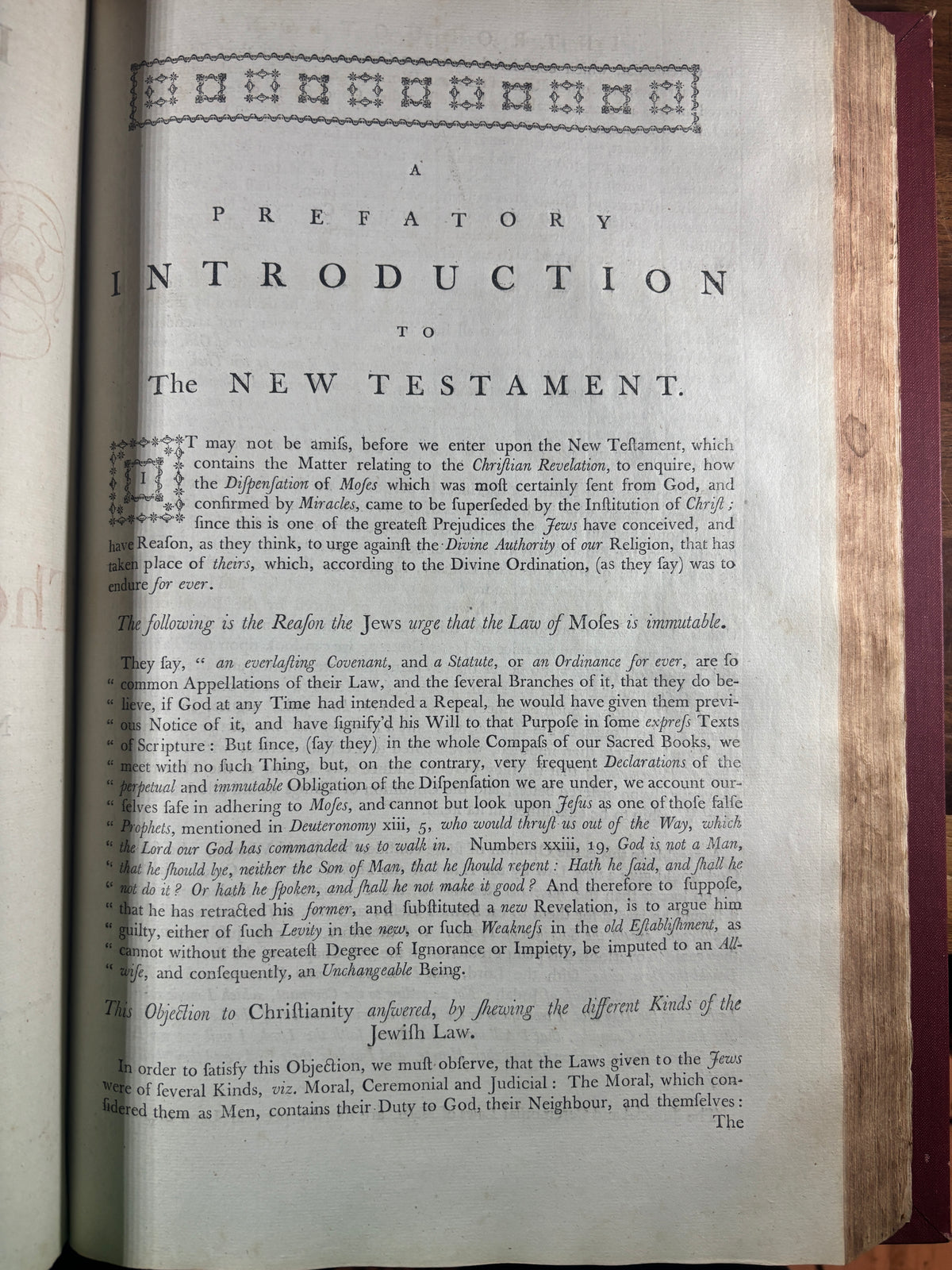
New Testament: Birmingham, Verulam Press, N. Boden and T. Appleby, 1770.
The general title identifies the work as An Illustration of the Holy Bible, containing the sacred texts of the Old and New Testaments, together with the Apocrypha.
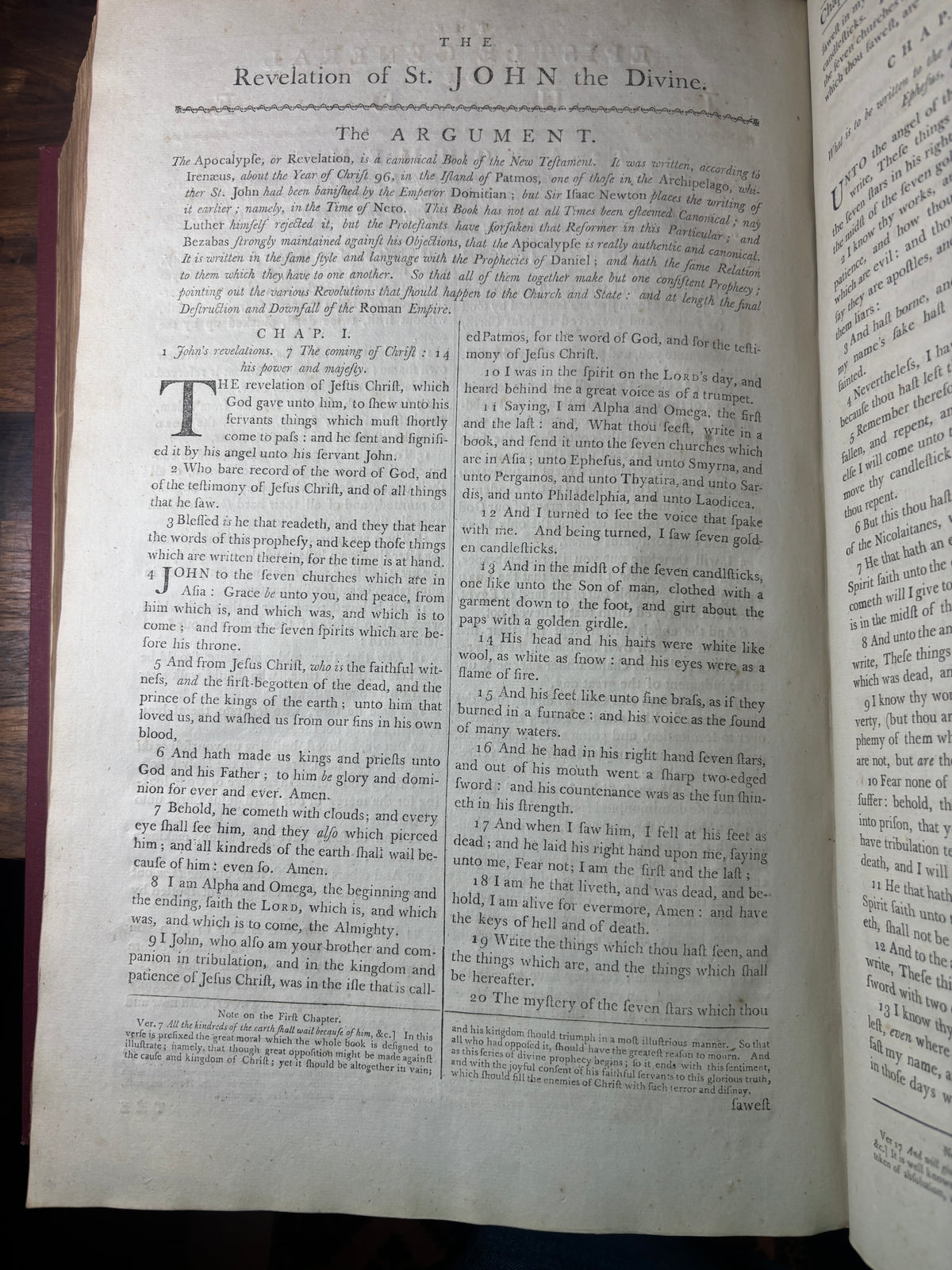
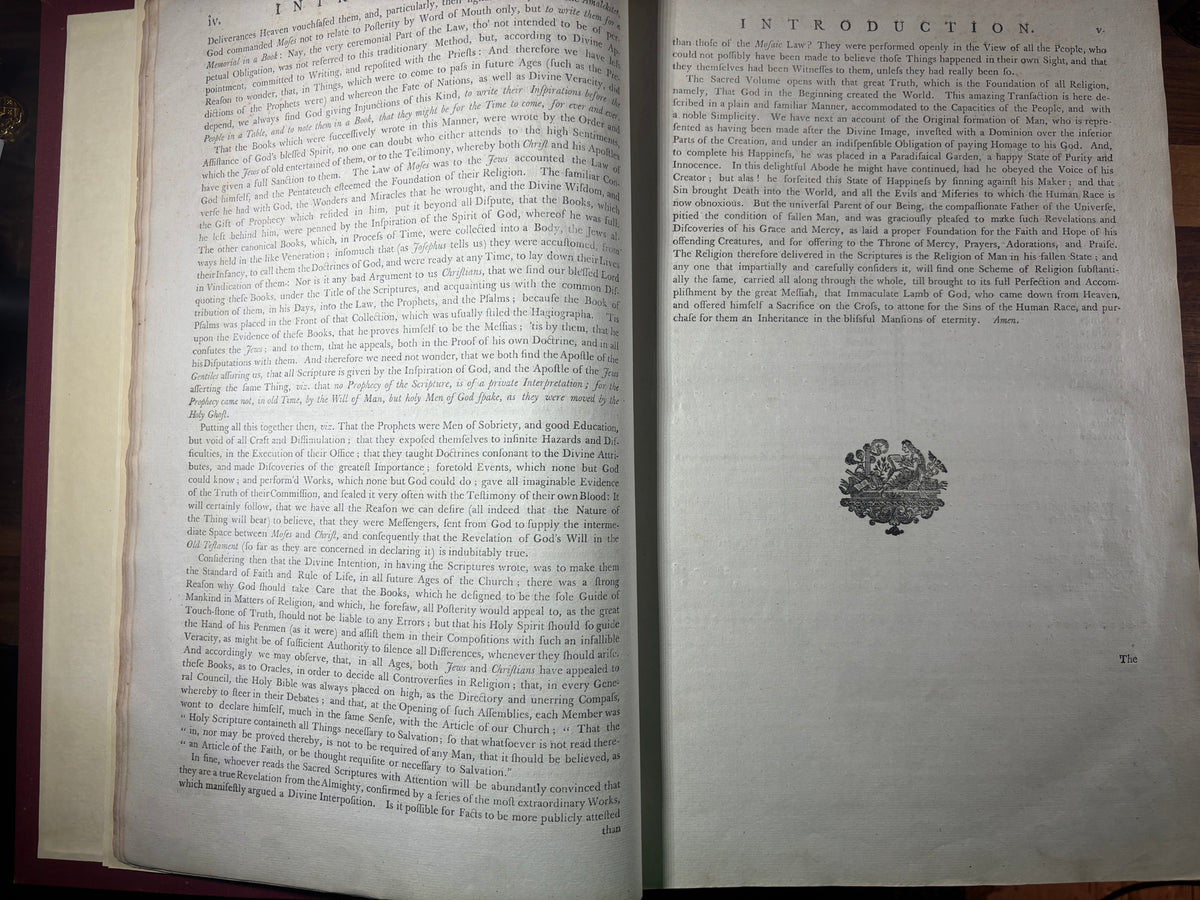
In addition to the biblical text, the edition incorporates explanatory commentary and observations on difficult passages and mistranslations, reflecting the eighteenth-century interest in producing accessible, extensively annotated family Bibles.
The edition is recorded in Herbert's bibliography of the English Bible as number 1204 and is described as apparently the earliest Bible printed in Birmingham.
Illustrations
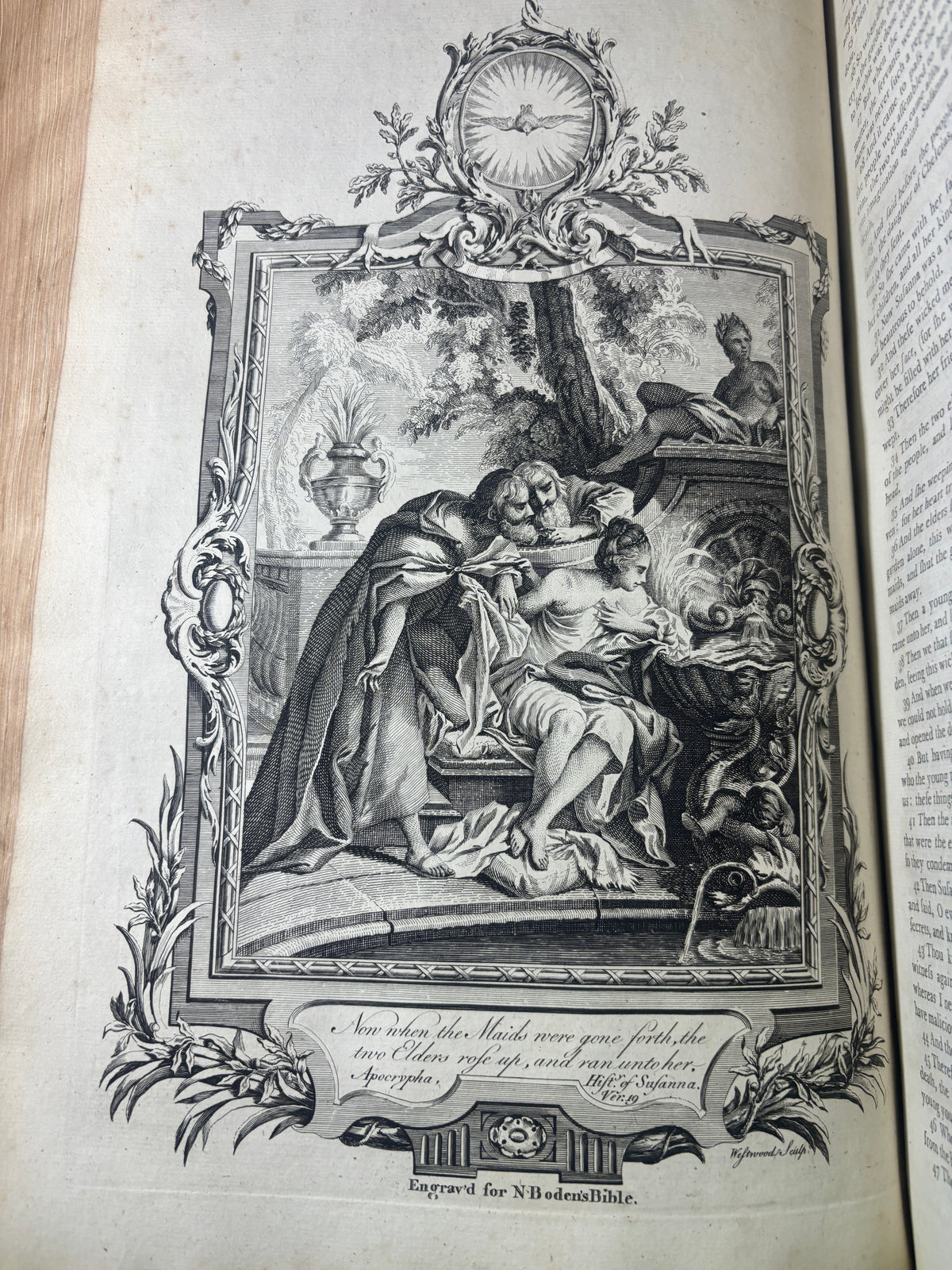
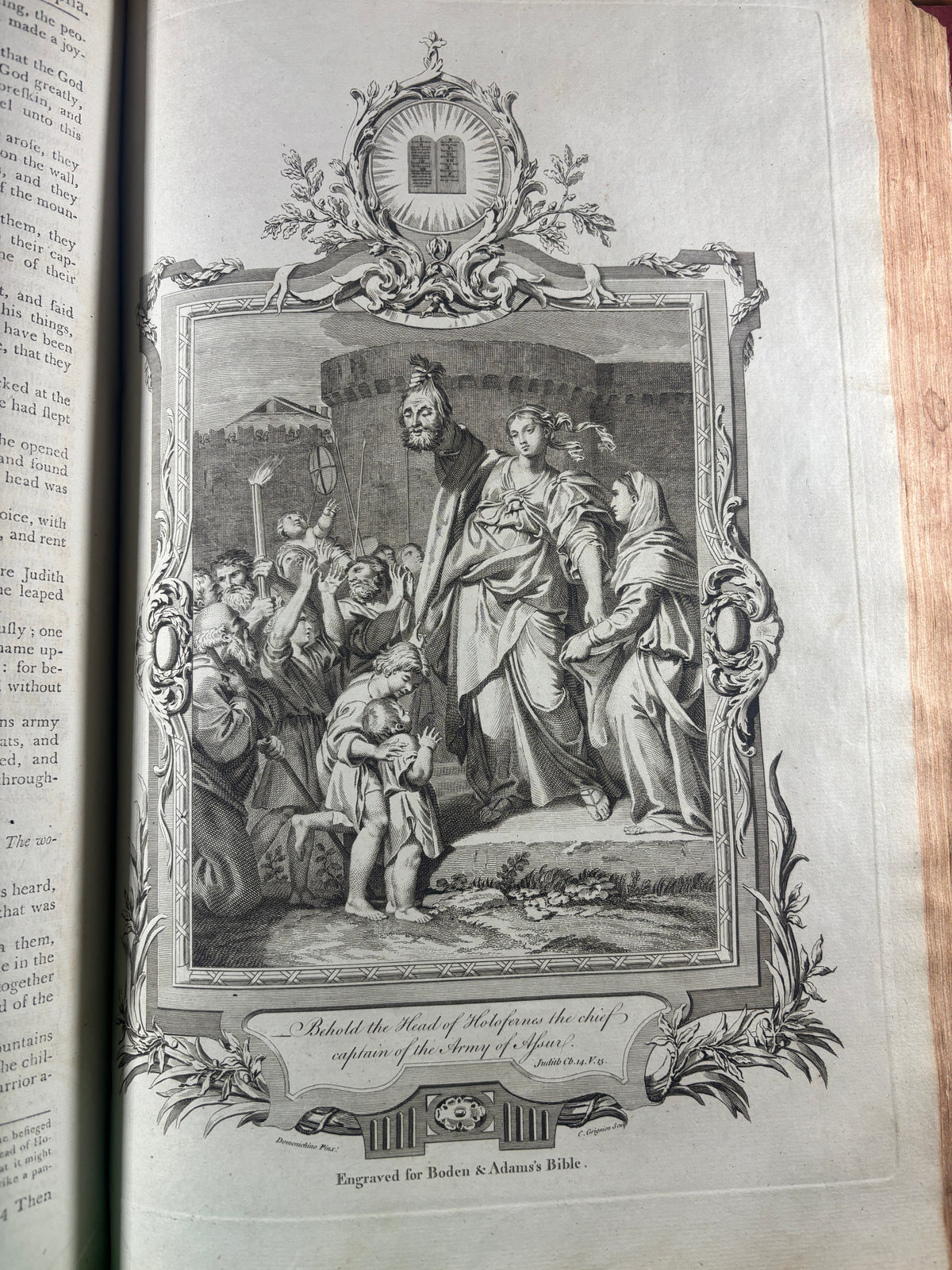
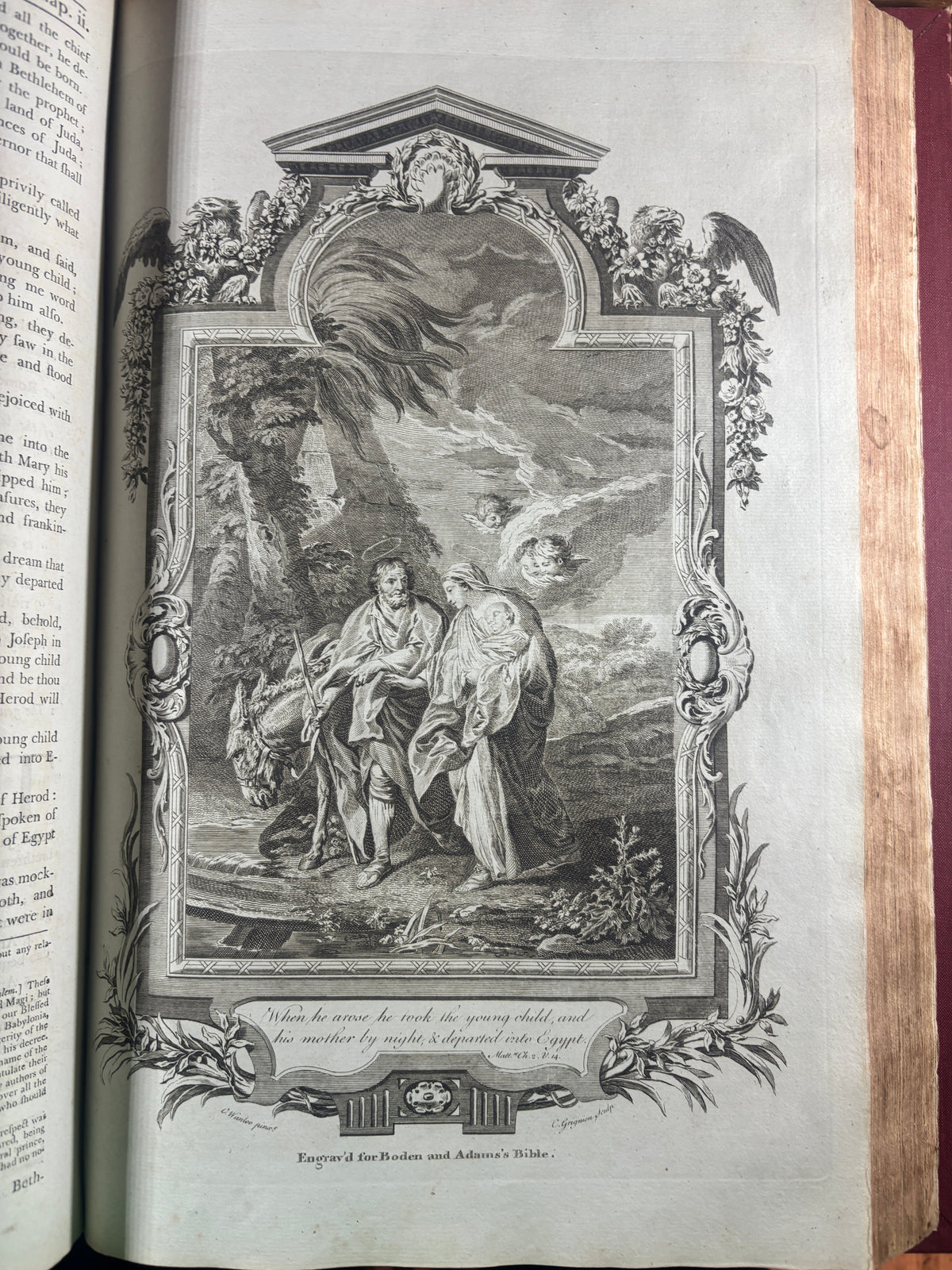
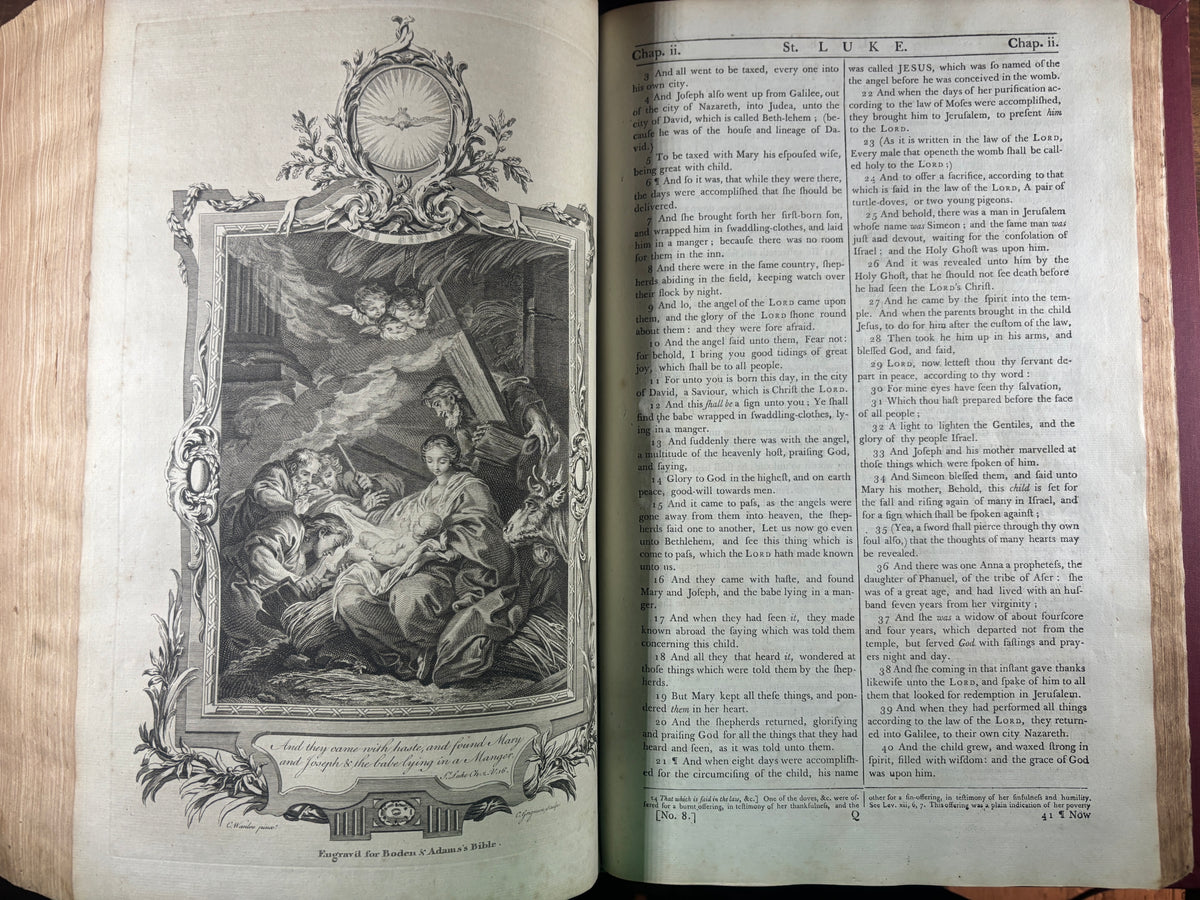
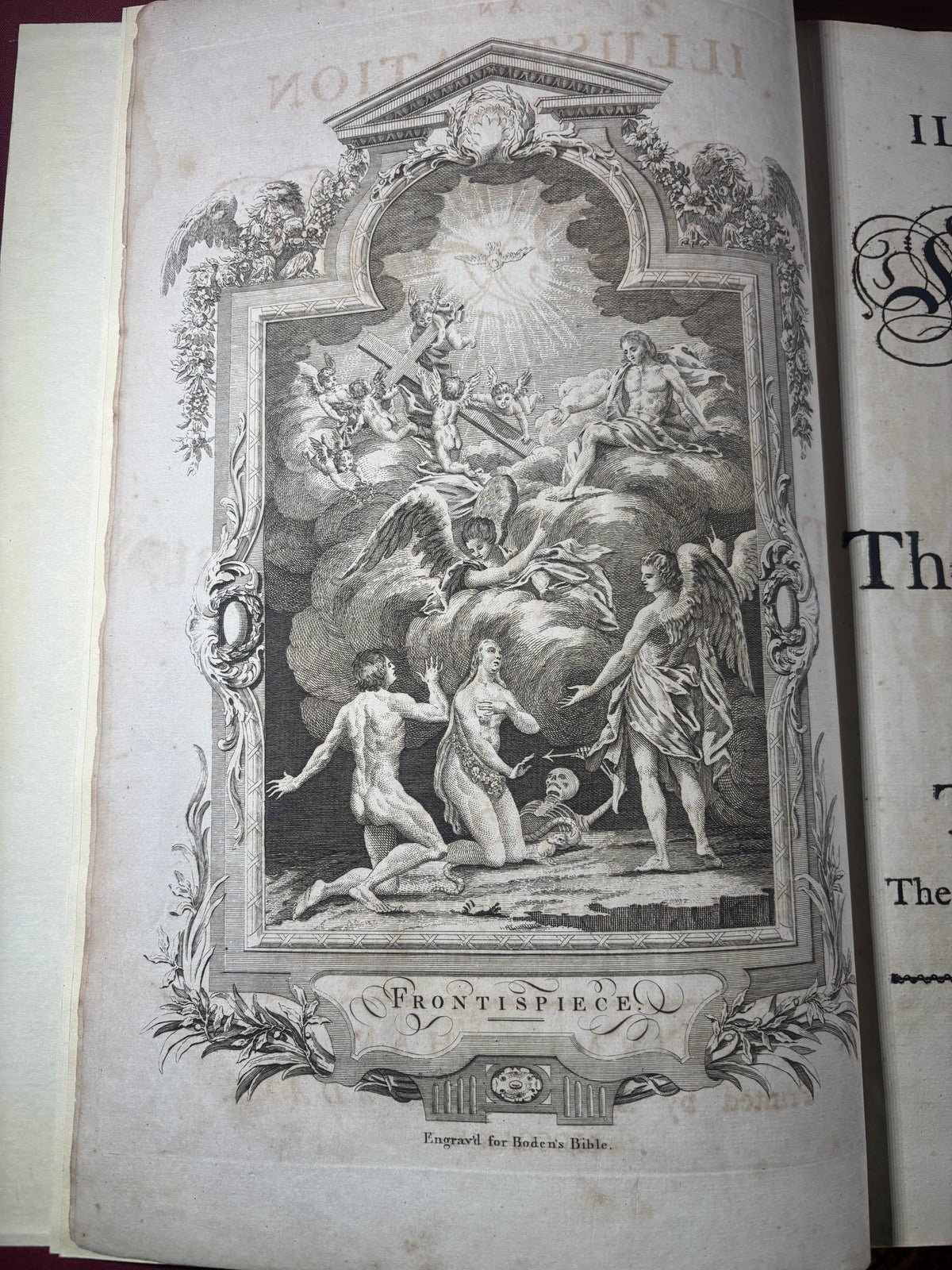
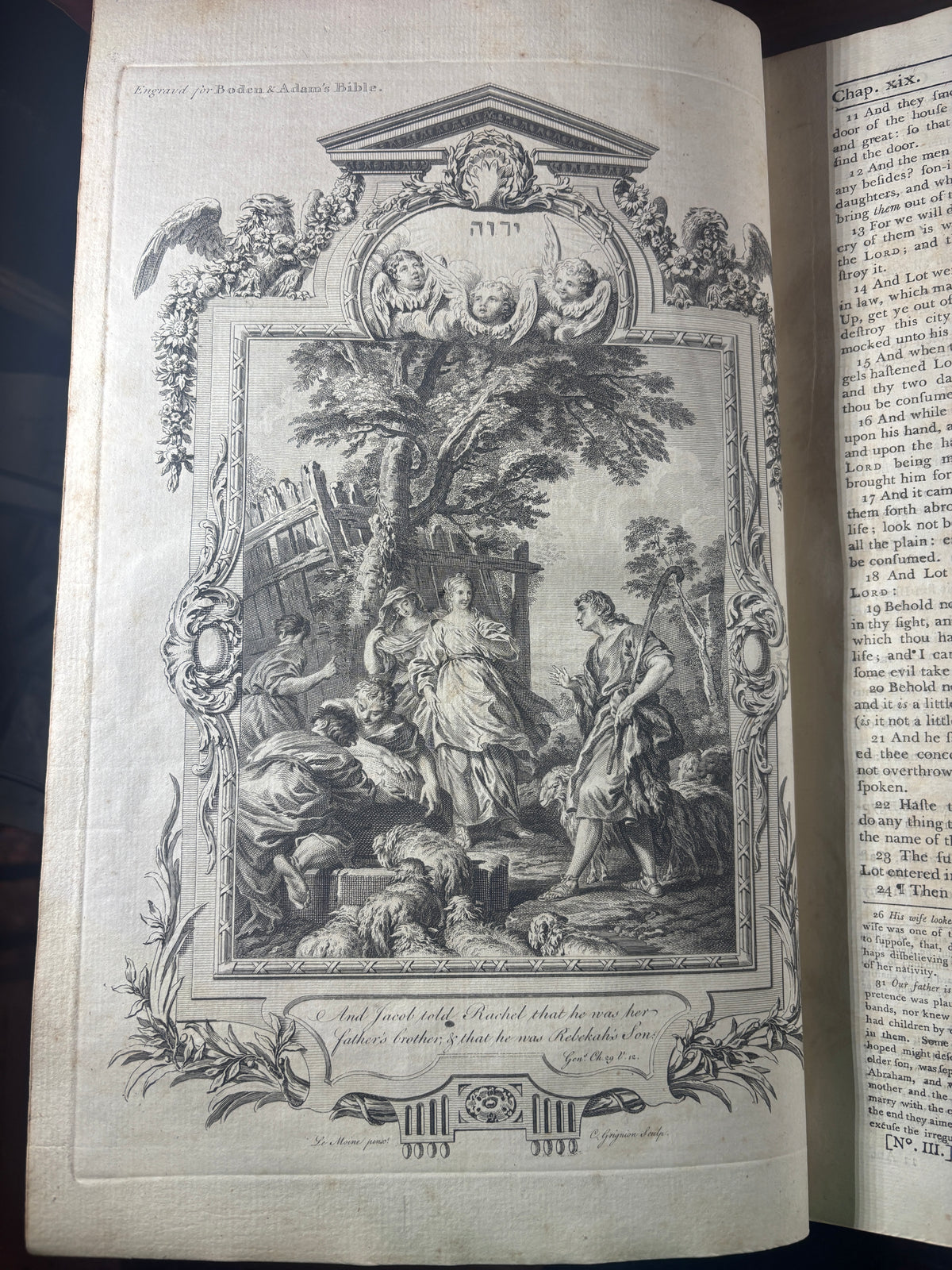
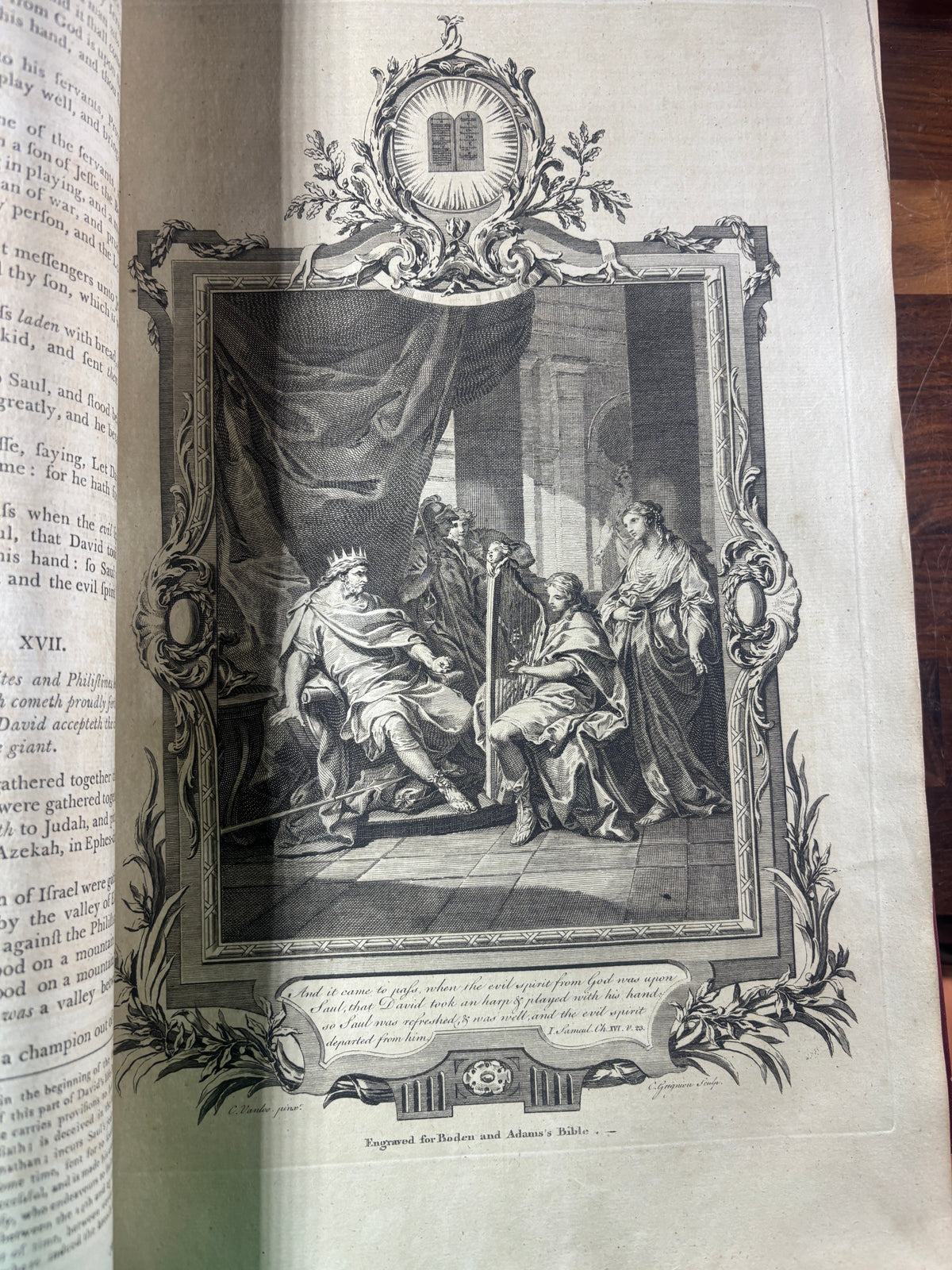
The volume contains 19 full-page copperplate engravings, including the general frontispiece, illustrating important episodes from biblical history.
The engravings depict scenes from both the Old and New Testaments, including subjects associated with David and Saul, Judith and Holofernes, Susanna and the Elders, the Nativity, and the Flight into Egypt.
Several illustrations feature elaborate ornamental borders characteristic of eighteenth-century engraved Bible illustration, with decorative architectural and Rococo elements surrounding the principal scenes.
Some plates bear the signature of the engraver Charles Grignion, a prominent eighteenth-century engraver whose work appeared in numerous illustrated publications.
The surviving illustrations form an extensive visual accompaniment to the biblical text. The original required number of engravings has not been conclusively established, and no separate New Testament frontispiece has been identified.
Provenance and Family Inscriptions
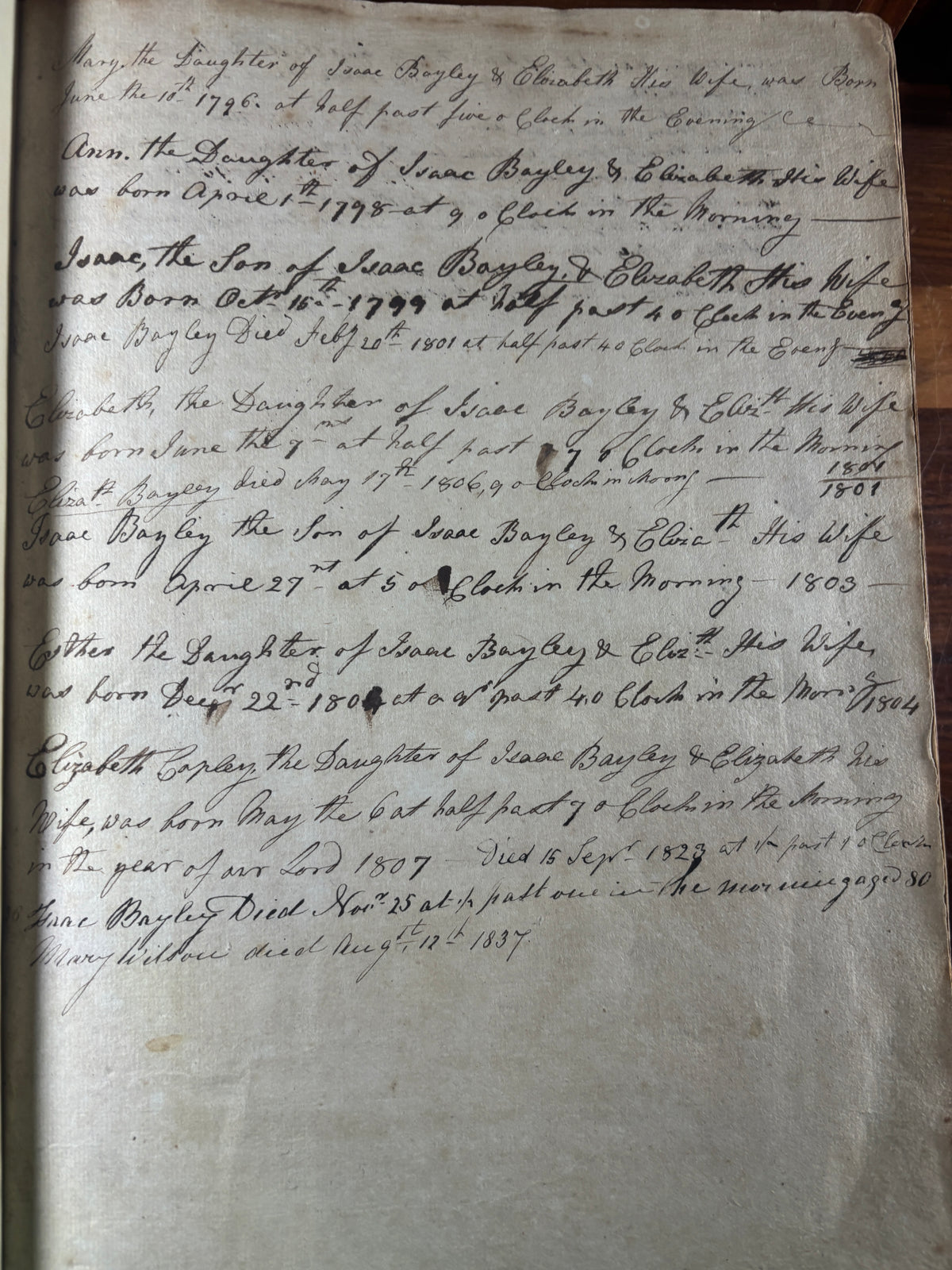
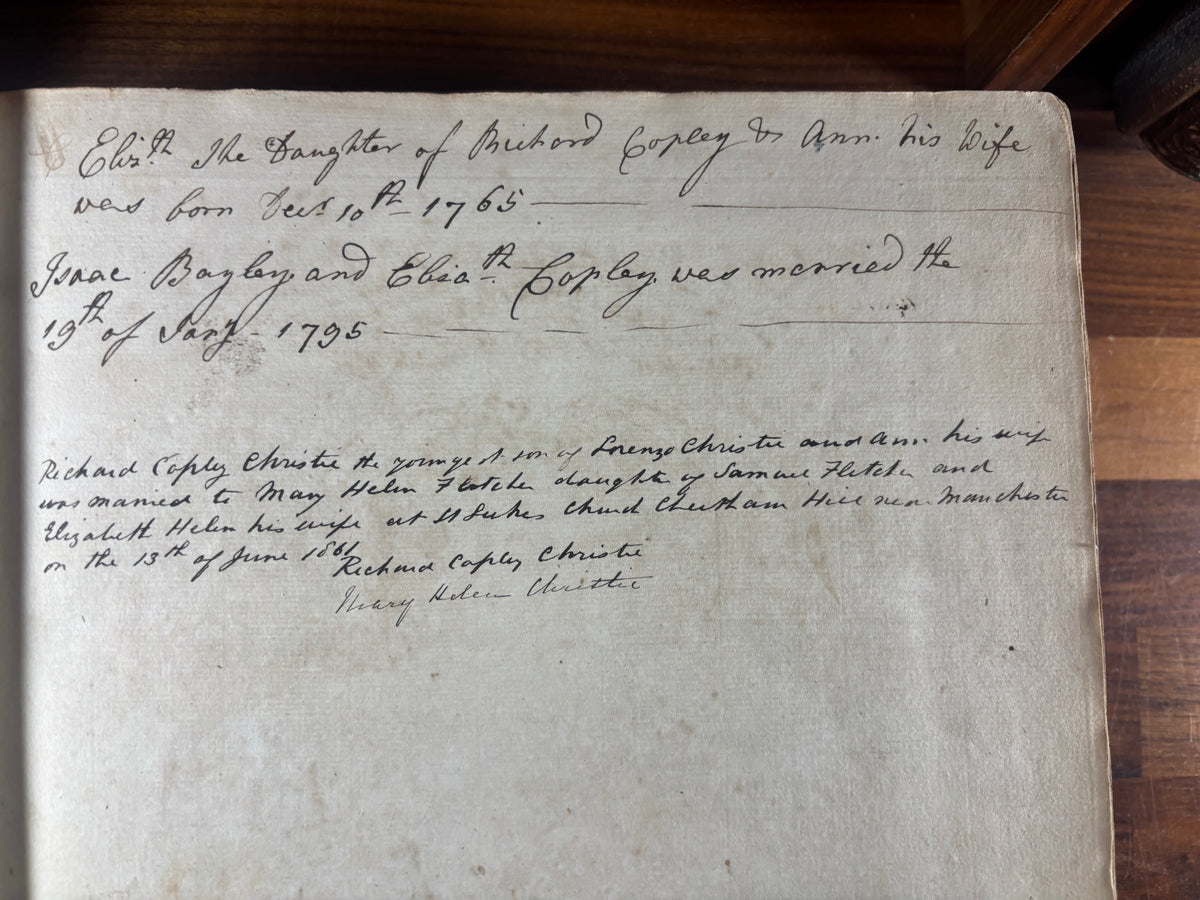
Of particular interest are the extensive manuscript family records preserved within the volume, documenting several generations of the Copsey and Bayley families.
The inscriptions record numerous births, marriages, and deaths extending from the eighteenth century into the nineteenth century.
Among the identifiable entries are references to Isaac Bayley and Elizabeth Copsey, whose marriage is recorded in September 1795, together with the births of their children during the following decade.
Additional inscriptions appear to record members of the Copsey family, including Richard Copsey and his descendants, with further family events continuing into the 1830s.
These records provide an evocative account of the Bible's use as a family register, preserving the history of its former owners over several generations.
Binding and Condition
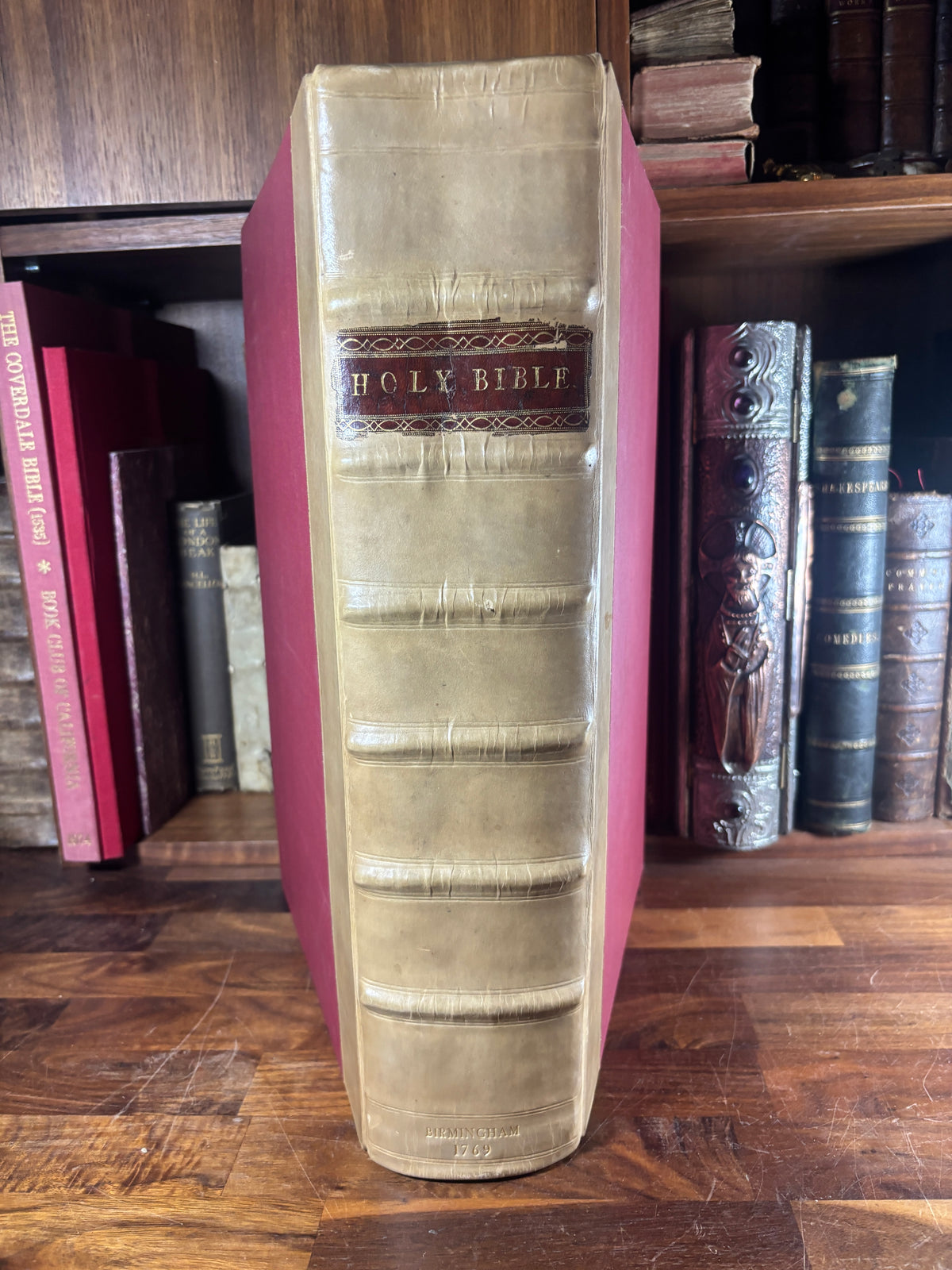
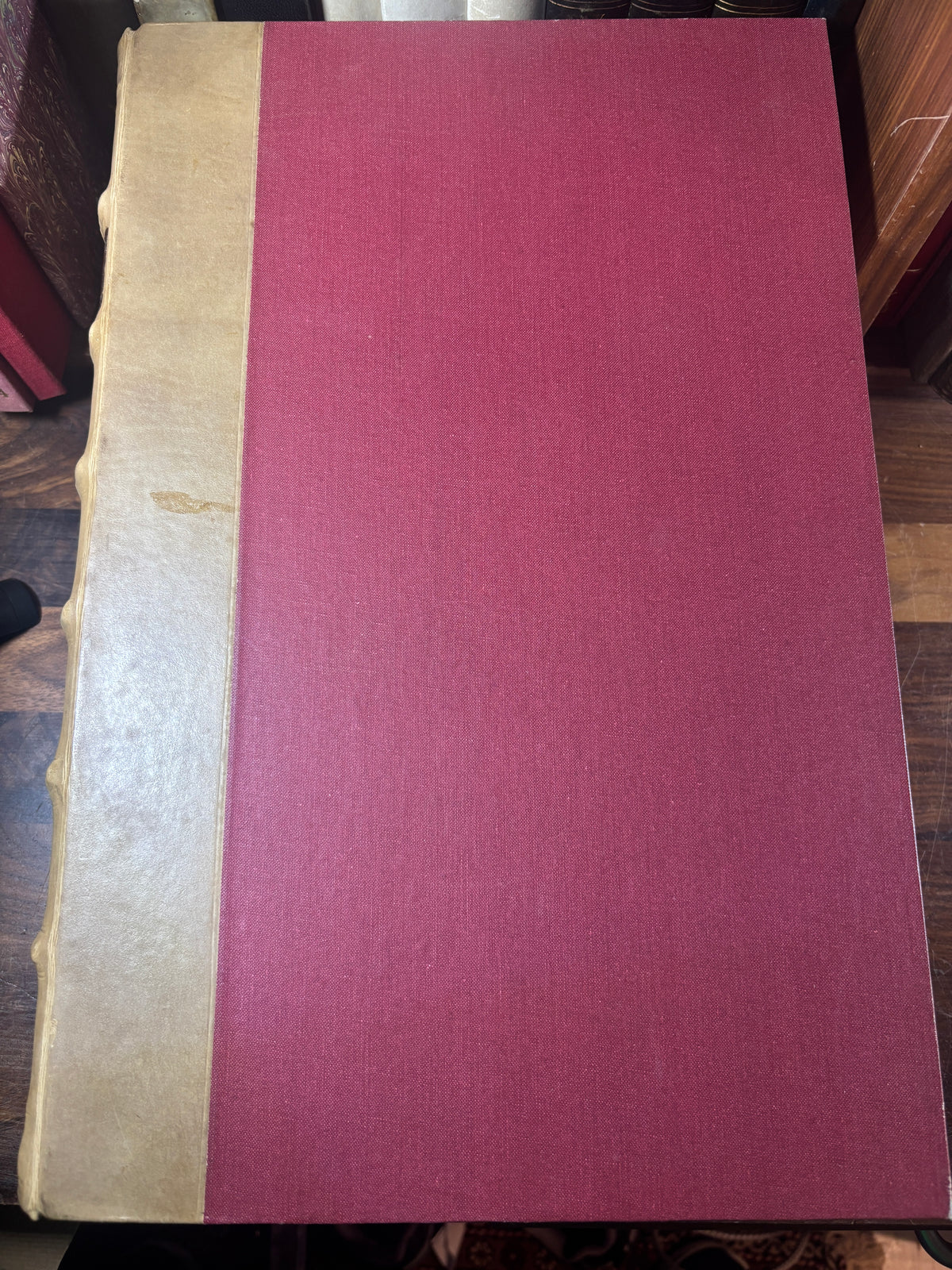
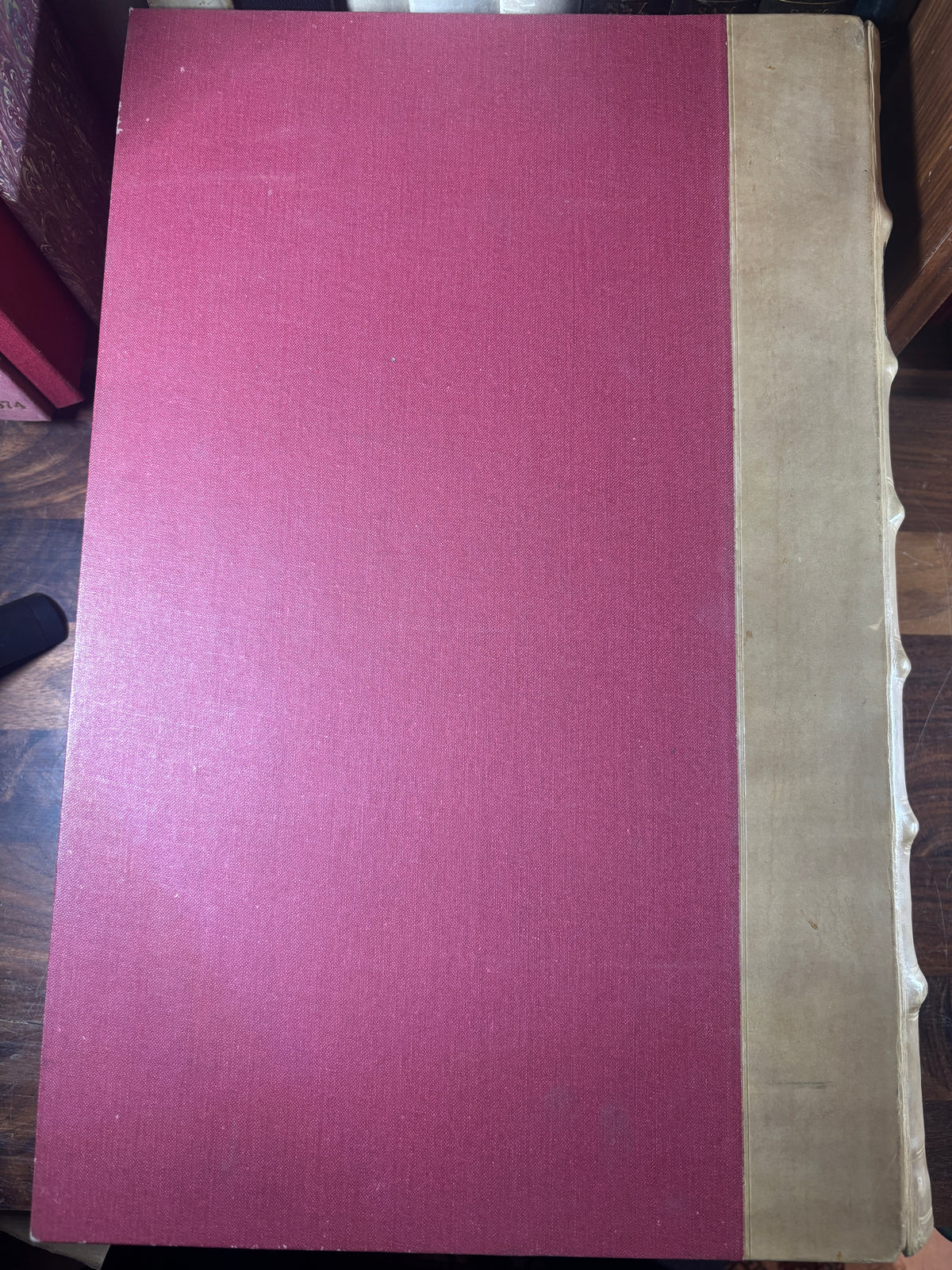
Bound in later half calf over burgundy canvas-covered boards, with raised bands to the spine, a gilt-lettered red title label reading Holy Bible, and Birmingham 1769 stamped in gilt at the foot.
The binding presents attractively, with the calf displaying a pale patina and the boards retaining their burgundy covering.
Internally, the volume displays occasional foxing, age-related toning, and general signs of handling consistent with its considerable age. The numerous full-page engravings remain an especially attractive feature.
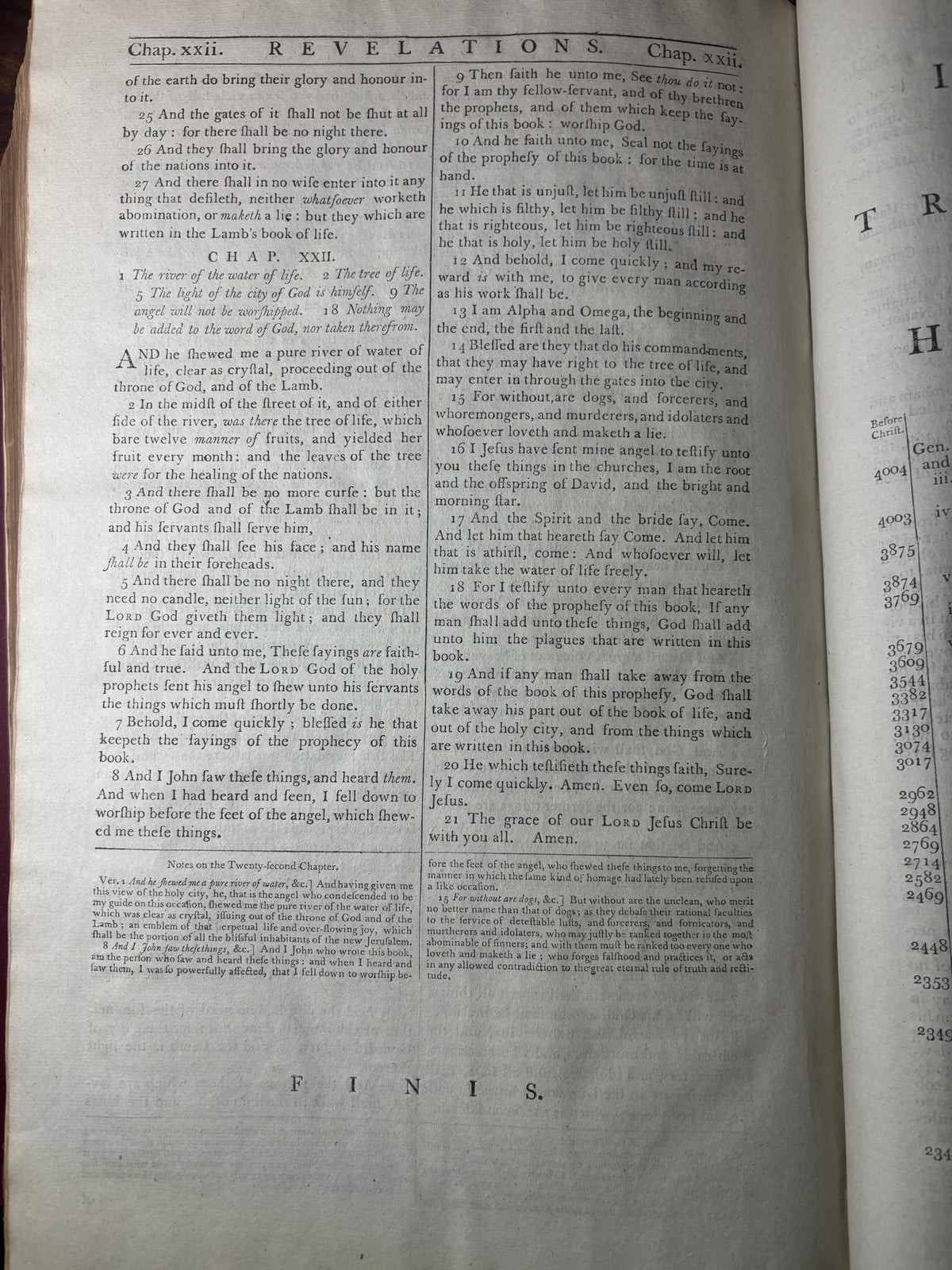
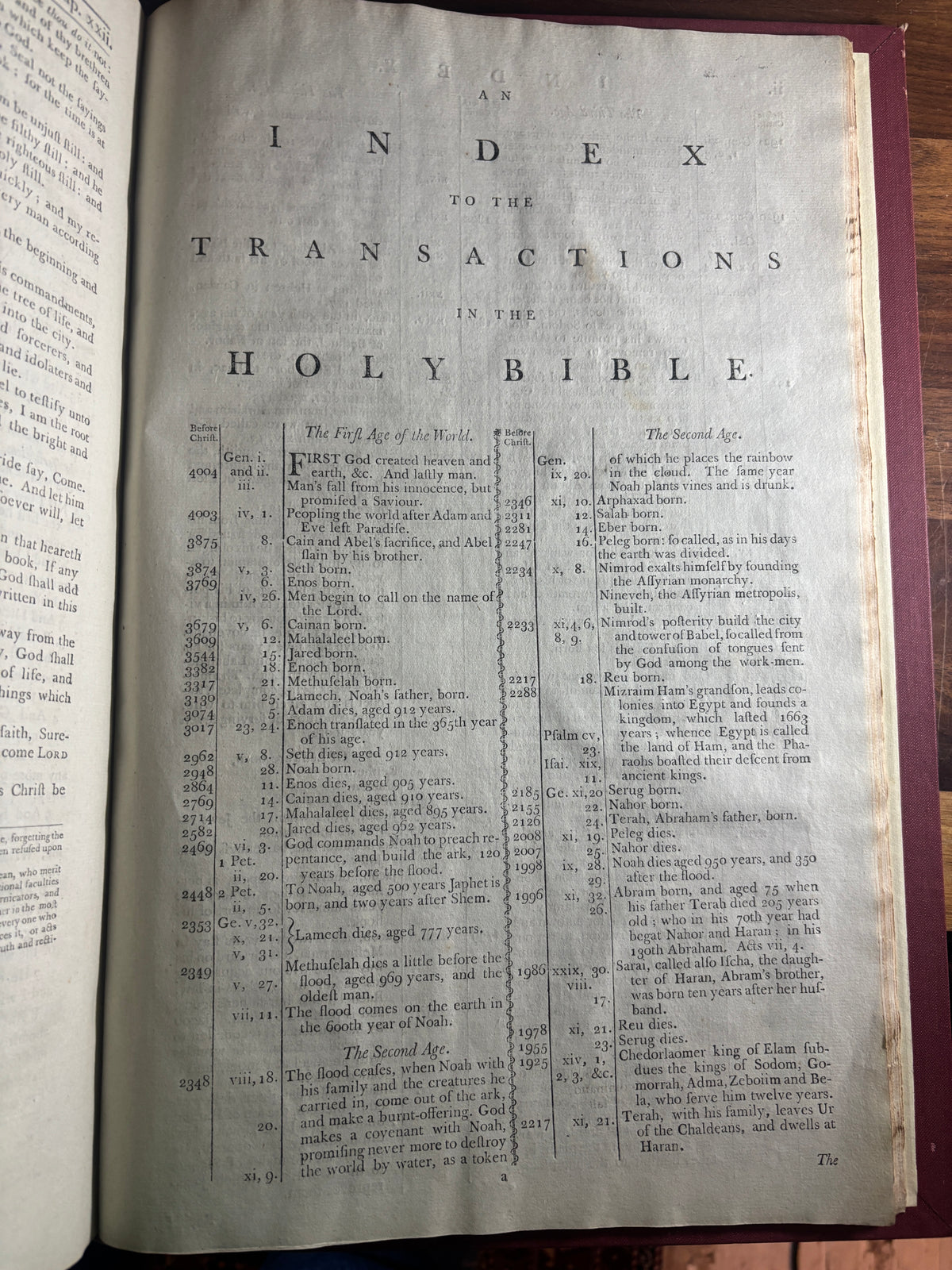
The Old Testament, Apocrypha, and New Testament title pages are present. The New Testament concludes at Revelation 22:21, while the index survives through its concluding words, THE END.
Bibliographical Reference
Herbert 1204.
An important early Birmingham Bible, combining a significant place in English printing history with an extensive suite of copperplate engravings and manuscript family provenance spanning several generations.
Dimensions:
Weight - 6.77kg
Height - 42.8cm
Width - 29.5cm
Thickness - 9cm
Share